



- Details
- More images
Products description
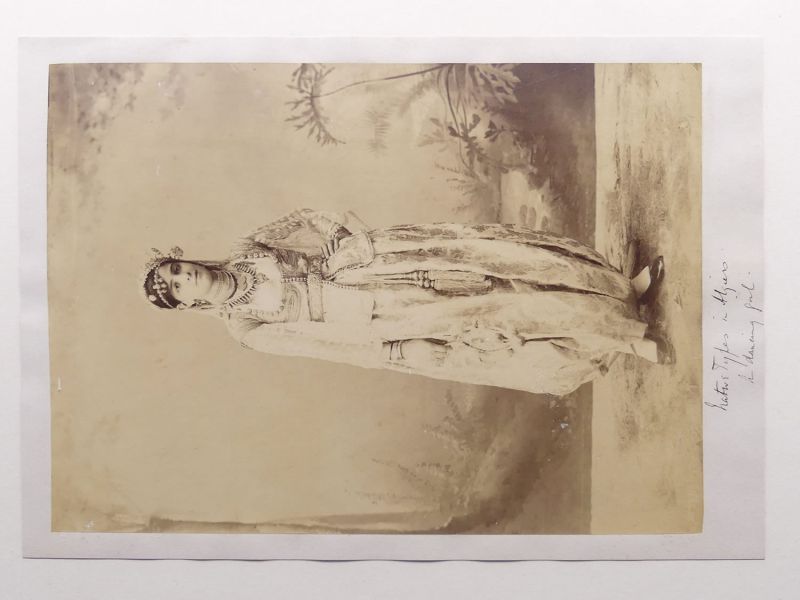
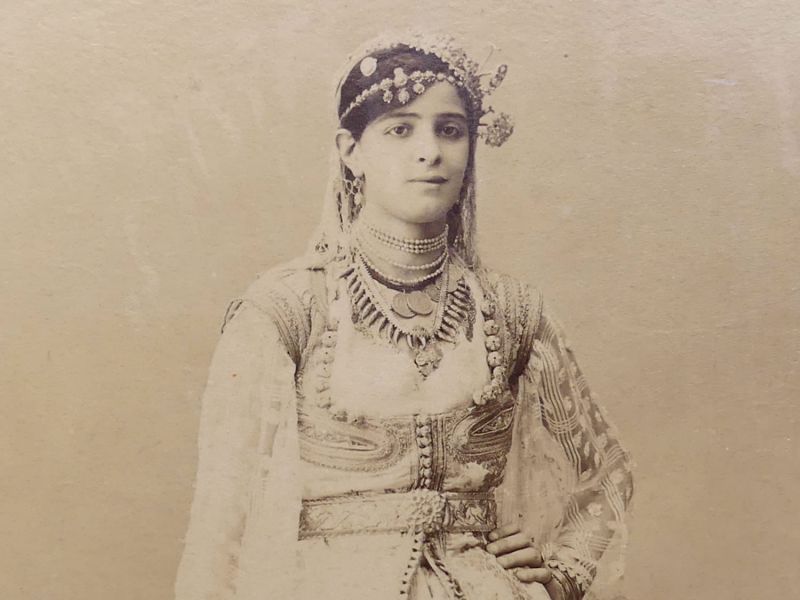
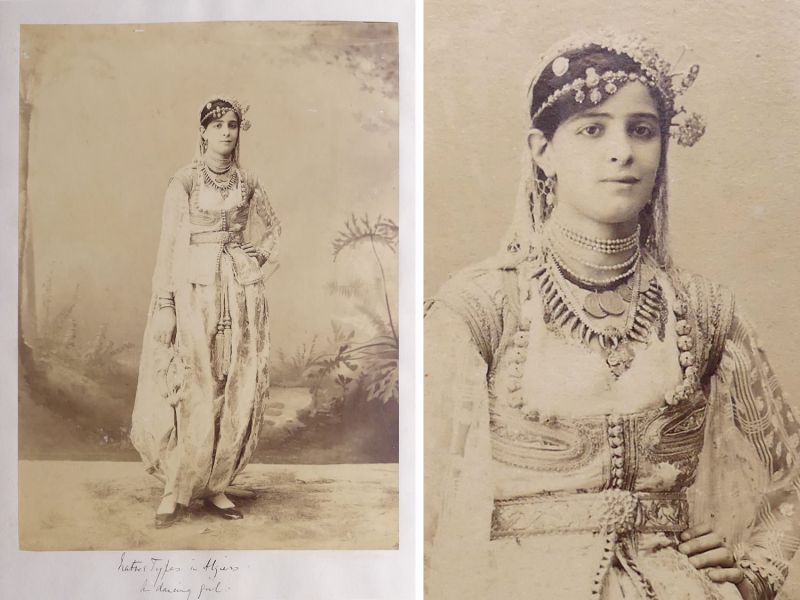
This historical photograph shows an ethnographically exceptionally valuable, rare, and fascinating portrait view of a young woman in the traditional costume of the Algiers region, taken as an original albumin print mounted on cardboard. The albumin process used was the dominant photochemical technique of that era, in which egg white was used to bind the light-sensitive silver salts to the paper, giving the photographs their characteristic warm sepia tone, a soft glossy surface, and high detail sharpness.
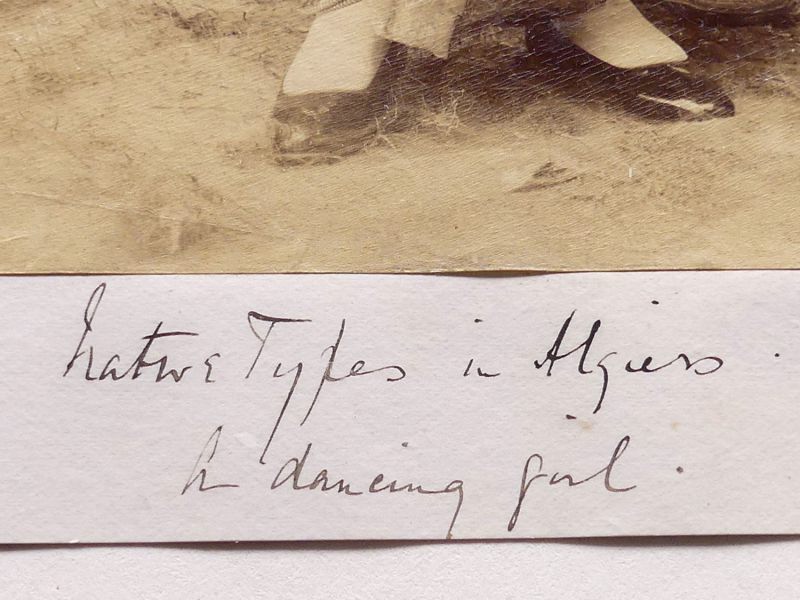
The motif, impressively staged in portrait format, documents the so-called "Costume Algérois", which was heavily influenced by Ottoman culture and is characterized by an extremely elaborate headdress as well as opulent necklaces. Particularly striking about this magnificent jewelry ensemble are the pearl necklaces fitting tightly around the neck, in fine combination with significantly longer chains carrying large coins, which served simultaneously as a visible family heritage and a status symbol in North Africa at the time. The bottom margin of the backing cardboard features a contemporary handwritten English note reading "Native Types in Algiers. A dancing girl", which precisely identifies the depicted subject as a traditional dancer and lends the image a special documentary value.
The bottom left corner of the image features an original caption within the photo negative, which has faded over the decades and can now only be recognized indistinctly, meaning the exact authorship of the photographer is officially considered unknown. This spectacular ethnographic testimony originated in the period between 1880 and 1890, during the peak phase of European interest in the culture of the Maghreb. The antique collector's item features the photograph dimensions of 26 x 18,8 cm mounted on a 29,6 x 21 cm original cardboard backing and is in good age-appropriate condition with a beautiful, even, slight toning. It shows a waviness of the cardboard due to storage, minimal small abrasions on the image surface, as well as a historical dealer sticker with a barcode on the back.
The motif, impressively staged in portrait format, documents the so-called "Costume Algérois", which was heavily influenced by Ottoman culture and is characterized by an extremely elaborate headdress as well as opulent necklaces. Particularly striking about this magnificent jewelry ensemble are the pearl necklaces fitting tightly around the neck, in fine combination with significantly longer chains carrying large coins, which served simultaneously as a visible family heritage and a status symbol in North Africa at the time. The bottom margin of the backing cardboard features a contemporary handwritten English note reading "Native Types in Algiers. A dancing girl", which precisely identifies the depicted subject as a traditional dancer and lends the image a special documentary value.
The bottom left corner of the image features an original caption within the photo negative, which has faded over the decades and can now only be recognized indistinctly, meaning the exact authorship of the photographer is officially considered unknown. This spectacular ethnographic testimony originated in the period between 1880 and 1890, during the peak phase of European interest in the culture of the Maghreb. The antique collector's item features the photograph dimensions of 26 x 18,8 cm mounted on a 29,6 x 21 cm original cardboard backing and is in good age-appropriate condition with a beautiful, even, slight toning. It shows a waviness of the cardboard due to storage, minimal small abrasions on the image surface, as well as a historical dealer sticker with a barcode on the back.
Quick purchase
Welcome back!
Newsletter subscription
E-mail address:
The newsletter can be canceled here or in your Account at any time.
Social Media


Payment methods


Raritaeten-Shop © 2026 | Template © 2009-2026 by modified eCommerce Shopsoftware
modified eCommerce Shopsoftware © 2009-2026