



- Details
- More images
Products description
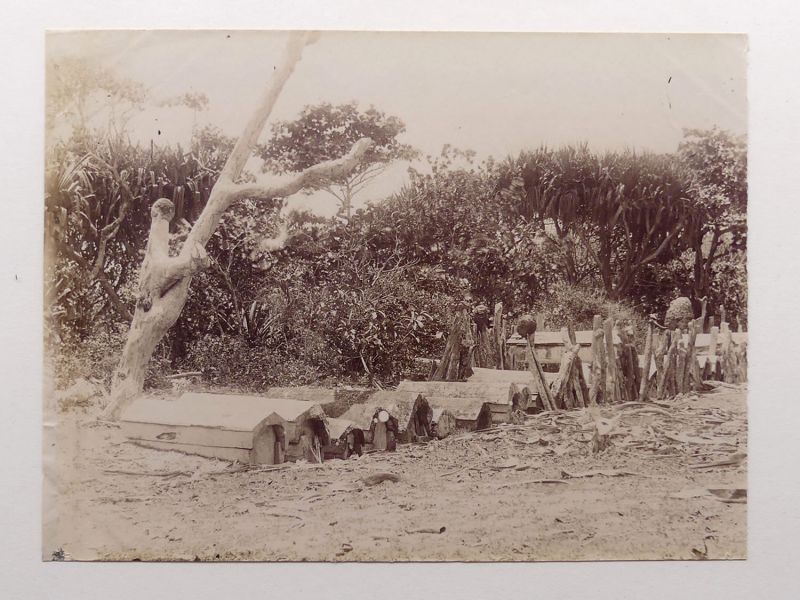
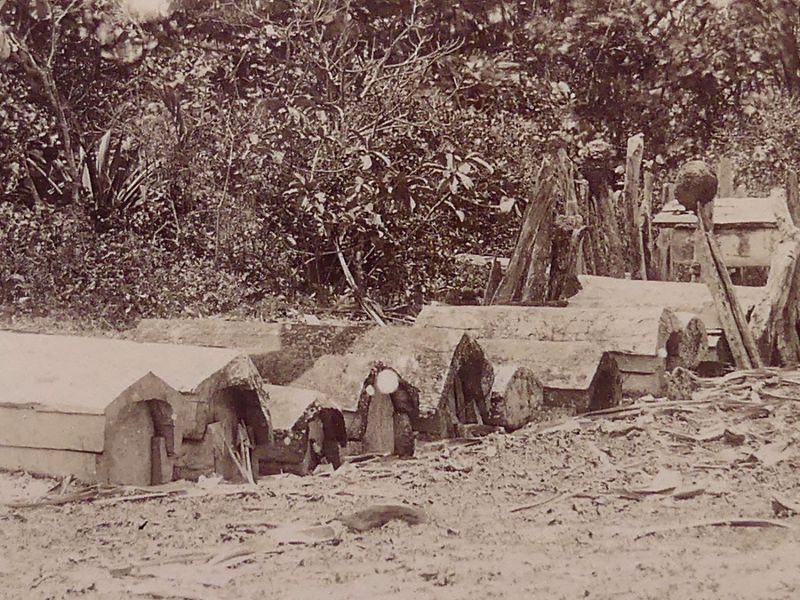
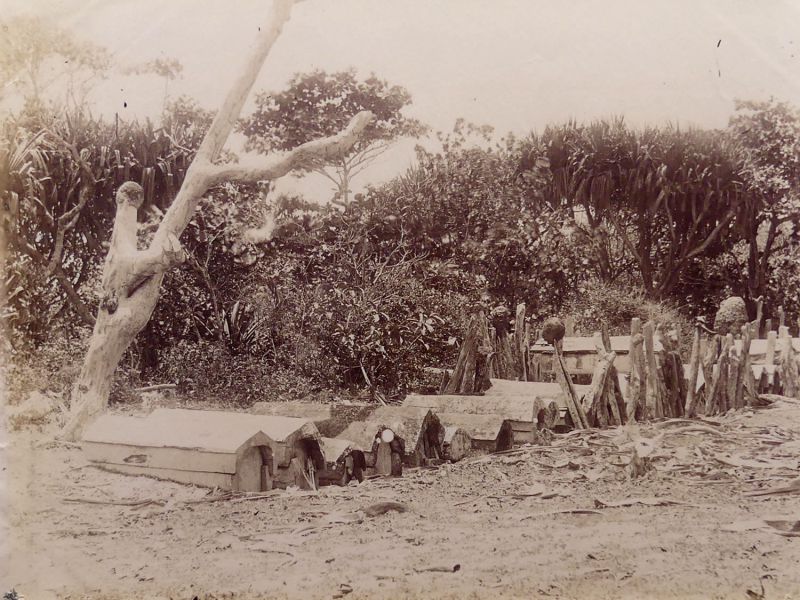
This historical photograph shows a rare and culturally significant view of a traditional Hova cemetery in Madagascar, taken as an original albumin print in the late 19th century. The albumin process used was the dominant photochemical technique of that era, in which egg white was used to bind the light-sensitive silver salts to the paper, giving the photographs their characteristic warm sepia tone, a soft glossy surface, and high detail sharpness. In the photograph, the characteristic stone burial sites and wooden grave stelae of the Hova, embedded in the dense tropical vegetation of the island, are documented in detail.
Since there are no textual references or signatures on the print, the photographer is considered unknown. Such ethnographic documentary photographs were often taken in the late 19th century by explorers or early expedition photographers to record the burial rites and architecture of the various ethnic groups of Madagascar for European archives and collections. This print was produced at the end of the 19th century, during the era of early colonial and ethnographic documentary photography between 1880 and 1895. From a historical perspective, these original albumin photos are of high value as they precisely preserve the untouched cultural structures and sacred sites of Madagascar prior to the profound Western influences of the 20th century, serving as rare primary documents.
The historical collector's item is available as a loose sheet and has the dimensions: 22 x 16,6 cm. The photo shows slight yellowing at the edges, small and light creases at the edges and corners, is in good age-appropriate condition with slight toning, and features no artificial captions or stamps. Signs of wear are corresponding to age.
Since there are no textual references or signatures on the print, the photographer is considered unknown. Such ethnographic documentary photographs were often taken in the late 19th century by explorers or early expedition photographers to record the burial rites and architecture of the various ethnic groups of Madagascar for European archives and collections. This print was produced at the end of the 19th century, during the era of early colonial and ethnographic documentary photography between 1880 and 1895. From a historical perspective, these original albumin photos are of high value as they precisely preserve the untouched cultural structures and sacred sites of Madagascar prior to the profound Western influences of the 20th century, serving as rare primary documents.
The historical collector's item is available as a loose sheet and has the dimensions: 22 x 16,6 cm. The photo shows slight yellowing at the edges, small and light creases at the edges and corners, is in good age-appropriate condition with slight toning, and features no artificial captions or stamps. Signs of wear are corresponding to age.
Quick purchase
Welcome back!
Newsletter subscription
E-mail address:
The newsletter can be canceled here or in your Account at any time.
Social Media


Payment methods


Raritaeten-Shop © 2026 | Template © 2009-2026 by modified eCommerce Shopsoftware
modified eCommerce Shopsoftware © 2009-2026