



- Details
- More images
Products description
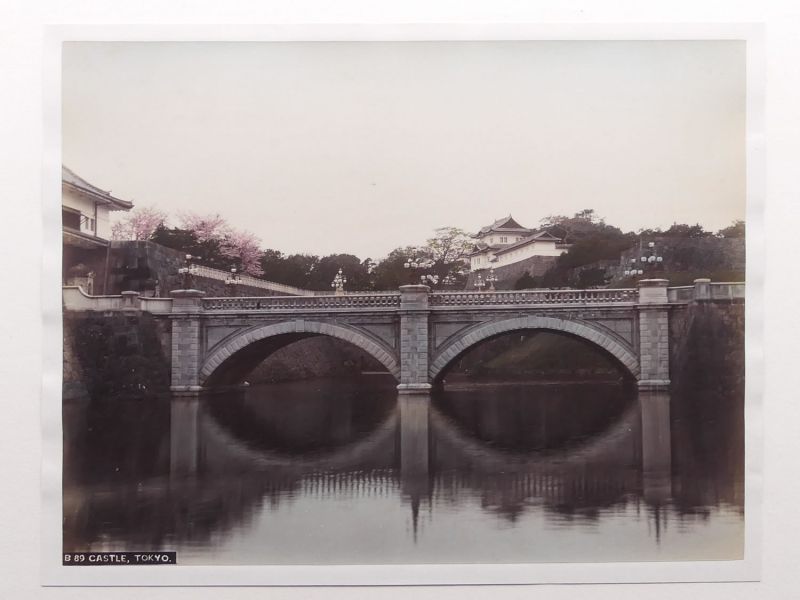
This historical photograph shows a monumental, culturally historically highly significant, and stately architectural view from Japan from the Meiji period, taken as an original albumin print mounted on cardboard. The albumin process used was the dominant photochemical technique of that era, in which egg white was used to bind the light-sensitive silver salts to the paper.
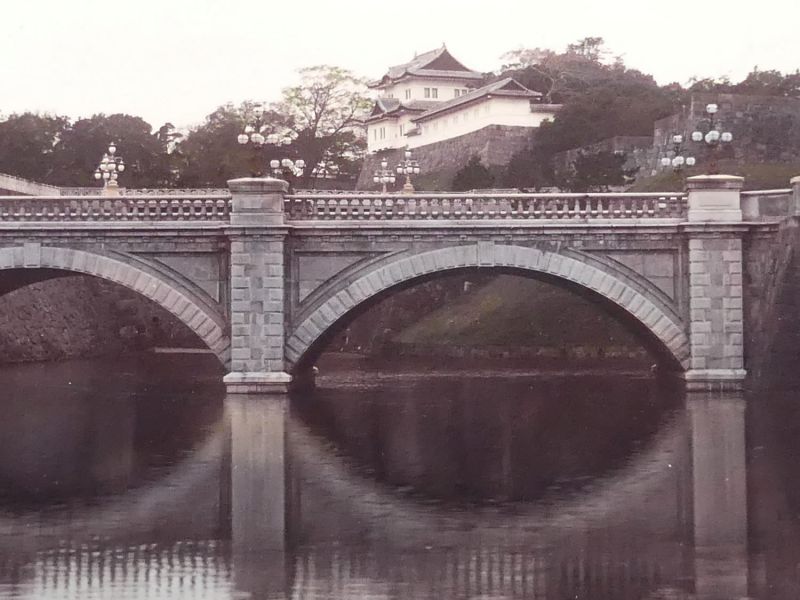
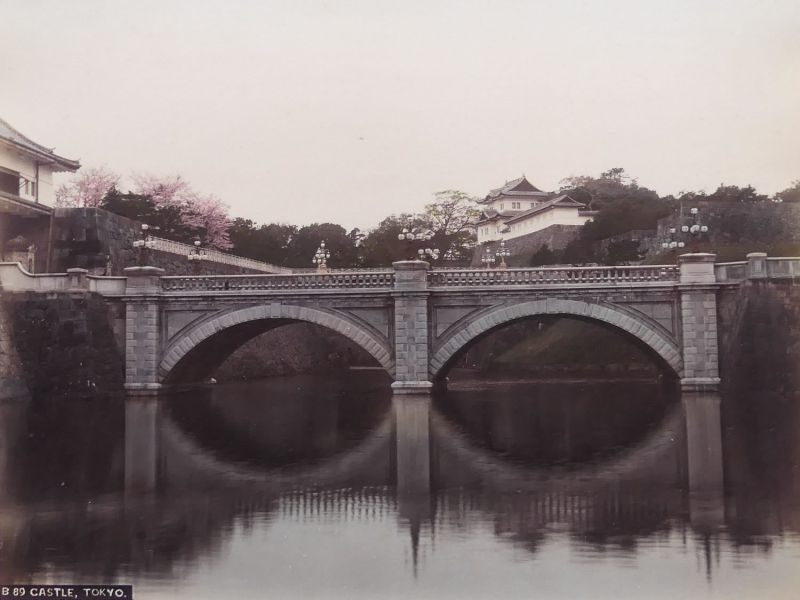
The motif documents the famous Seimon-Ishibashi Bridge, which is often popularly called Meganebashi due to its characteristic double arches and serves as a solemn ceremonial entrance to the inner Imperial Palace grounds in Tokyo. This history-rich stone bridge may traditionally only be crossed by the Emperor himself, the imperial family, and official state guests. The image title immortalized in the negative refers to the historical location of the palace, which was built on the foundations of the former, legendary Edo Castle. Since the exact authorship is officially considered unknown due to the lack of a signature, the piece is attributed to the leading commercial photo studios of the Yokohama school. The absolute highlight of this artwork, composed in landscape format, is the elaborate hand-coloring. Japan was the absolute world leader in this precise hand-coloring technique, used to create the impression of a lifelike color photograph.
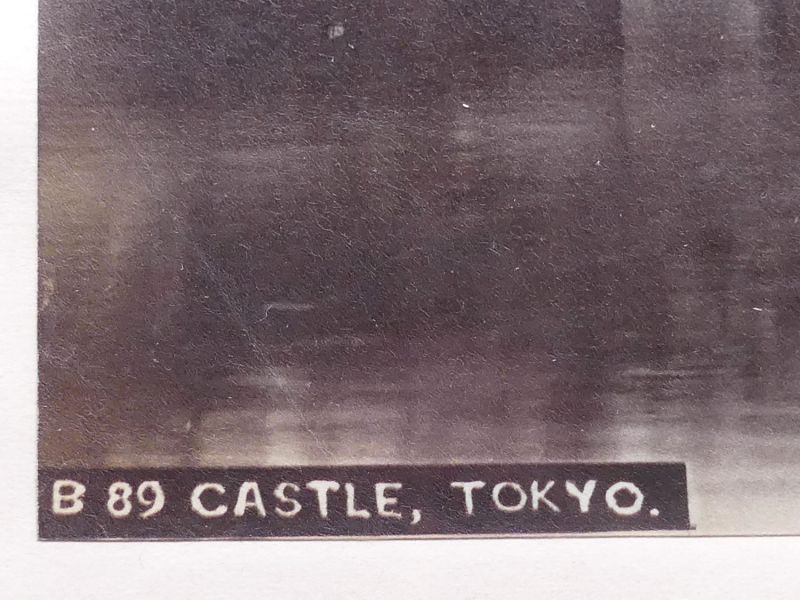
This spectacular document originated in the 1890s. The antique rarity features the photograph dimensions of 26,3 x 20,4 cm mounted on a 27,9 x 21,9 cm original cardboard backing and is in good age-appropriate condition with an even, slight toning. It shows a waviness of the cardboard due to storage and partially somewhat yellowed cardboard margins. Finely aged and faded image surface, as well as the original white caption within the photo negative at the bottom margin: "B89 CASTLE, TOKYO."
The motif documents the famous Seimon-Ishibashi Bridge, which is often popularly called Meganebashi due to its characteristic double arches and serves as a solemn ceremonial entrance to the inner Imperial Palace grounds in Tokyo. This history-rich stone bridge may traditionally only be crossed by the Emperor himself, the imperial family, and official state guests. The image title immortalized in the negative refers to the historical location of the palace, which was built on the foundations of the former, legendary Edo Castle. Since the exact authorship is officially considered unknown due to the lack of a signature, the piece is attributed to the leading commercial photo studios of the Yokohama school. The absolute highlight of this artwork, composed in landscape format, is the elaborate hand-coloring. Japan was the absolute world leader in this precise hand-coloring technique, used to create the impression of a lifelike color photograph.
This spectacular document originated in the 1890s. The antique rarity features the photograph dimensions of 26,3 x 20,4 cm mounted on a 27,9 x 21,9 cm original cardboard backing and is in good age-appropriate condition with an even, slight toning. It shows a waviness of the cardboard due to storage and partially somewhat yellowed cardboard margins. Finely aged and faded image surface, as well as the original white caption within the photo negative at the bottom margin: "B89 CASTLE, TOKYO."
Quick purchase
Welcome back!
Newsletter subscription
E-mail address:
The newsletter can be canceled here or in your Account at any time.
Social Media


Payment methods


Raritaeten-Shop © 2026 | Template © 2009-2026 by modified eCommerce Shopsoftware
modified eCommerce Shopsoftware © 2009-2026