



- Details
- More images
Products description
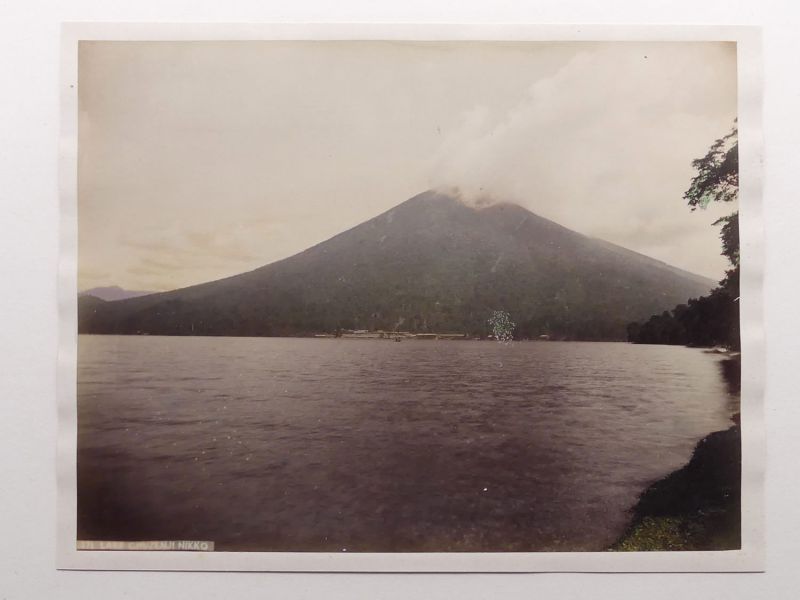
This historical photograph shows a scenically impressive, topographically significant, and atmospheric nature view from Japan from the Meiji period, taken as an original albumin print mounted on cardboard. The albumin process used was the dominant photochemical technique of that era, in which egg white was used to bind the light-sensitive silver salts to the paper.
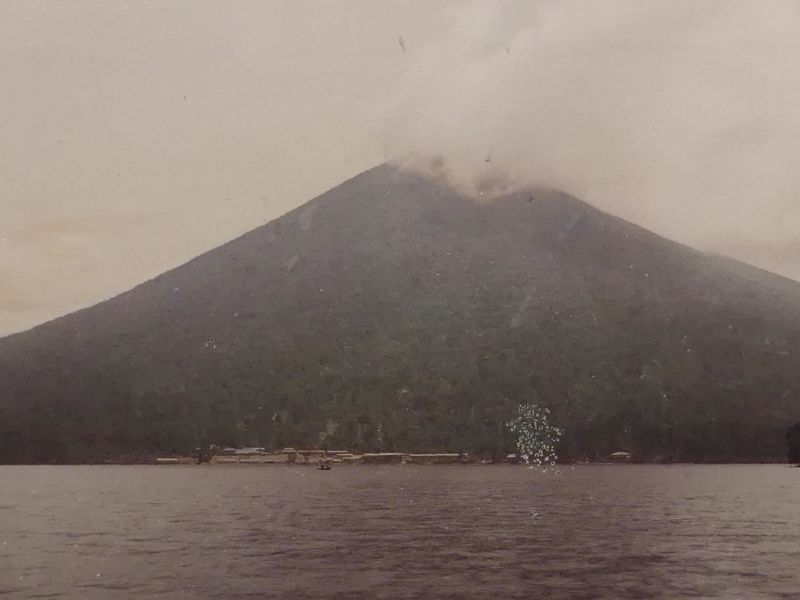
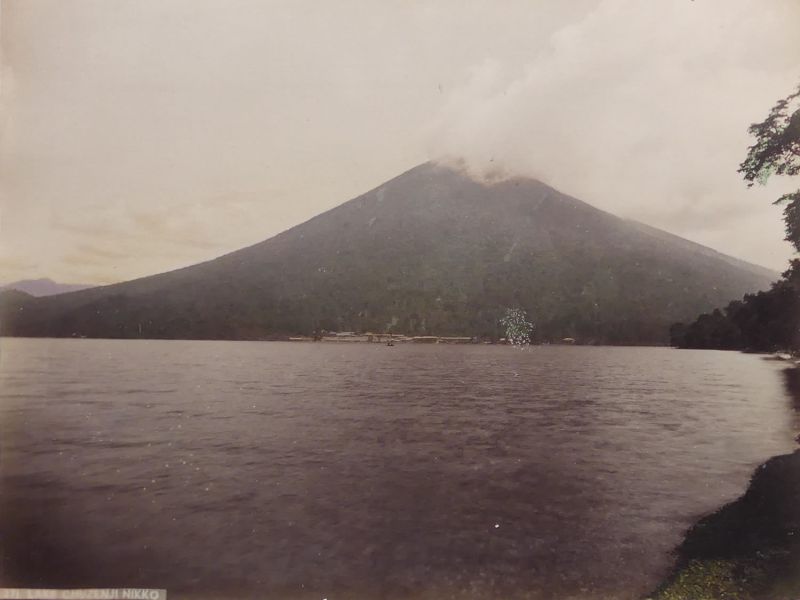
The motif documents the idyllic Lake Chuzenji in Nikko, which was formed about 20,000 years ago when a massive eruption of the Nantai volcano blocked the Daiyagawa River. In the background of the image, the majestic, cloud-shrouded cone of the Nantai volcano rises, while the historical settlement of Chugushi can presumably be discerned very small on the distant shore. Since the exact authorship is officially considered unknown due to the lack of an artist's signature, the piece is presumably attributed to the large commercial photo studios of the Yokohama school, which produced these views for exclusive souvenir albums for the Western market. The absolute highlight of this artwork, composed in landscape format, is the elaborate hand-coloring. Japan was the absolute world leader in this precise hand-coloring technique, used to create the impression of a lifelike color photograph.
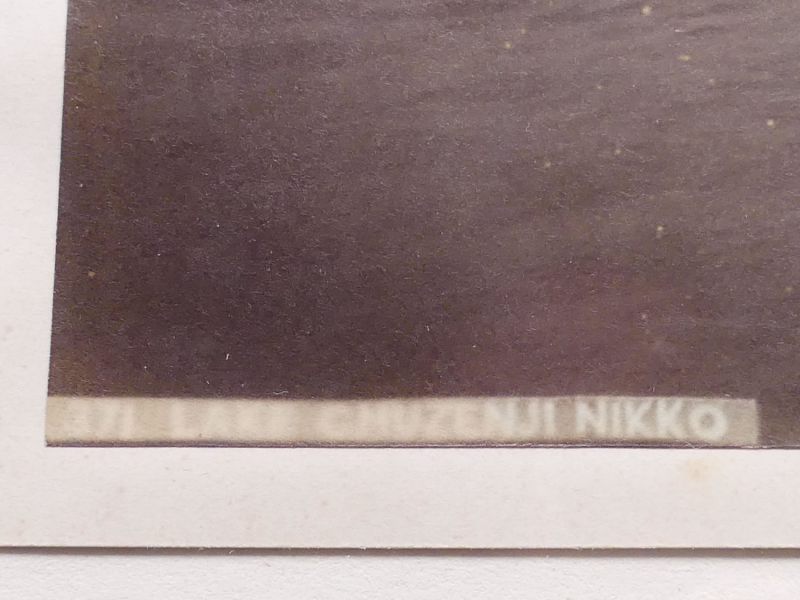
This document originated in the 1880s to 1890s. The antique collector's item features the photograph dimensions of 26,5 x 20,4 cm mounted on a 28,2 x 21,8 cm original cardboard backing and is in good age-appropriate condition with an even, slight toning. It shows a waviness of the cardboard due to storage, partially somewhat yellowed cardboard margins, and a slightly faded image surface. A negative image defect in the form of several light spots in the center of the image, as well as the original white caption within the photo negative at the bottom left margin, which is historically slightly blurred: "371 LAKE CHUZENJI NIKKO."
The motif documents the idyllic Lake Chuzenji in Nikko, which was formed about 20,000 years ago when a massive eruption of the Nantai volcano blocked the Daiyagawa River. In the background of the image, the majestic, cloud-shrouded cone of the Nantai volcano rises, while the historical settlement of Chugushi can presumably be discerned very small on the distant shore. Since the exact authorship is officially considered unknown due to the lack of an artist's signature, the piece is presumably attributed to the large commercial photo studios of the Yokohama school, which produced these views for exclusive souvenir albums for the Western market. The absolute highlight of this artwork, composed in landscape format, is the elaborate hand-coloring. Japan was the absolute world leader in this precise hand-coloring technique, used to create the impression of a lifelike color photograph.
This document originated in the 1880s to 1890s. The antique collector's item features the photograph dimensions of 26,5 x 20,4 cm mounted on a 28,2 x 21,8 cm original cardboard backing and is in good age-appropriate condition with an even, slight toning. It shows a waviness of the cardboard due to storage, partially somewhat yellowed cardboard margins, and a slightly faded image surface. A negative image defect in the form of several light spots in the center of the image, as well as the original white caption within the photo negative at the bottom left margin, which is historically slightly blurred: "371 LAKE CHUZENJI NIKKO."
Quick purchase
Welcome back!
Newsletter subscription
E-mail address:
The newsletter can be canceled here or in your Account at any time.
Social Media


Payment methods


Raritaeten-Shop © 2026 | Template © 2009-2026 by modified eCommerce Shopsoftware
modified eCommerce Shopsoftware © 2009-2026