



- Details
- More images
Products description
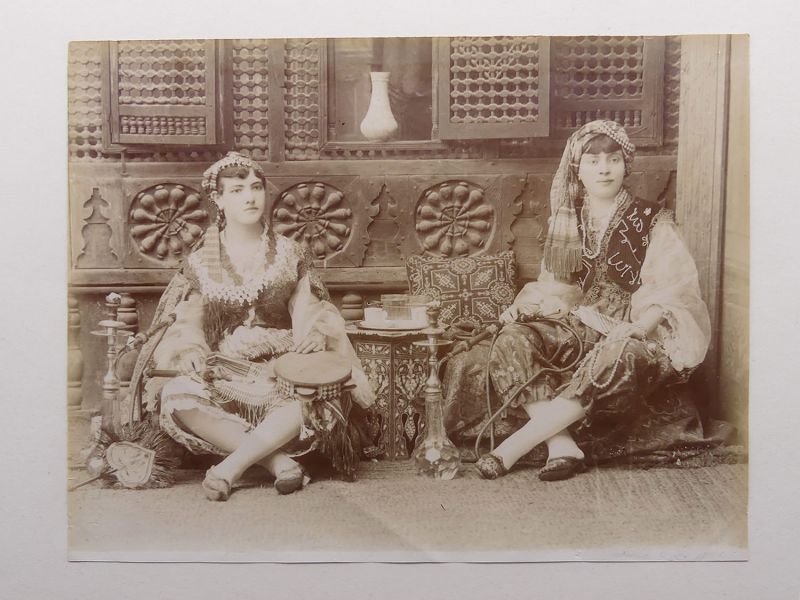
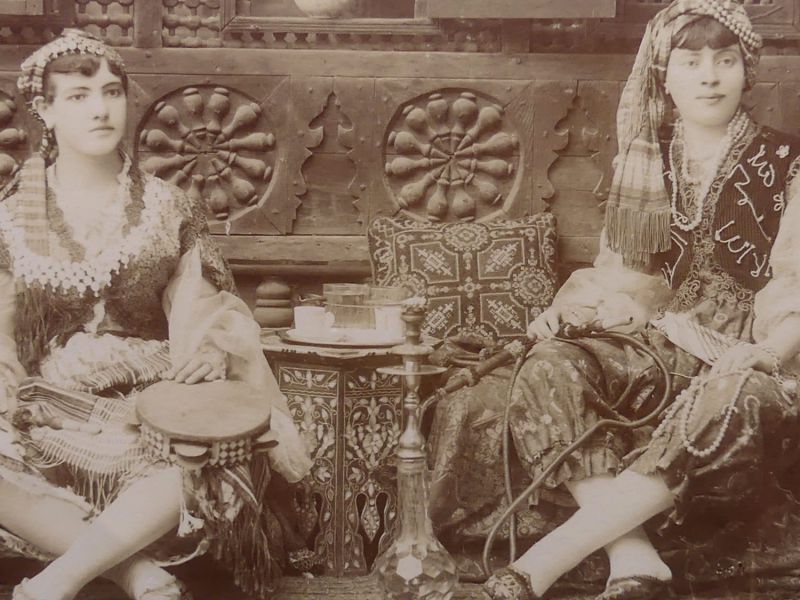
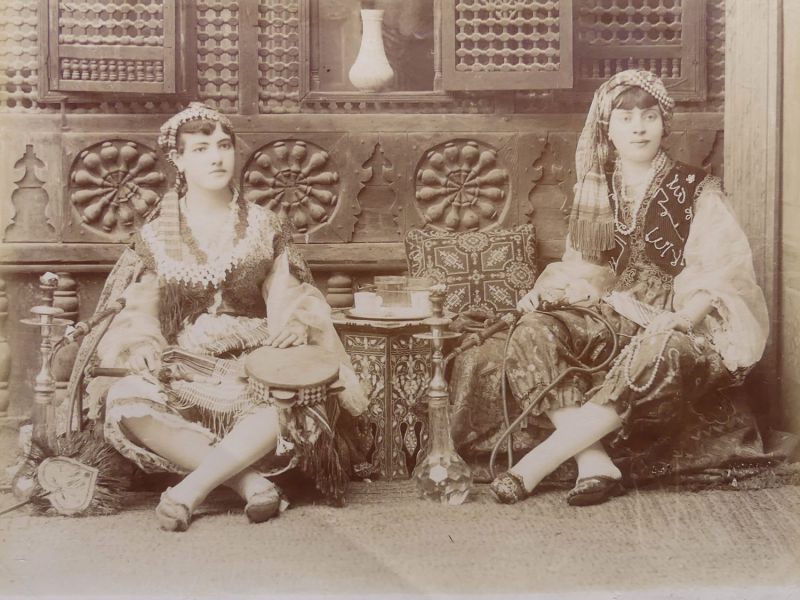
This historical photograph shows a detailed and artistically arranged studio staging from the era of Orientalism, taken as an original albumin print. The albumin process used was the dominant photochemical technique of that era, in which egg white was used to bind the light-sensitive silver salts to the paper, giving the photographs their characteristic warm sepia tone, a soft glossy surface, and high detail sharpness. The motif, composed in portrait format, documents two women in elaborate traditional clothing of the region, posing in a typical 19th-century salon setting. The fine textile details of the garments are complemented by historical attributes; an ornate water pipe stands at the center of the image composition, while the lady sitting on the left holds a tambourine and the lady on the right holds the mouthpiece of the water pipe.
The entire arrangement, with the direct gaze into the camera, follows the contemporary aesthetic conventions of European collectors and tourists for whom such scenes were staged in the studio. This print was produced in the period between 1880 and 1890, during the peak phase of Egyptian travel photography. From a historical perspective, this original albumin photo is of high value as it preserves the visual construction of the Orient and the costume history of the late Ottoman era as an authentic visual primary document.
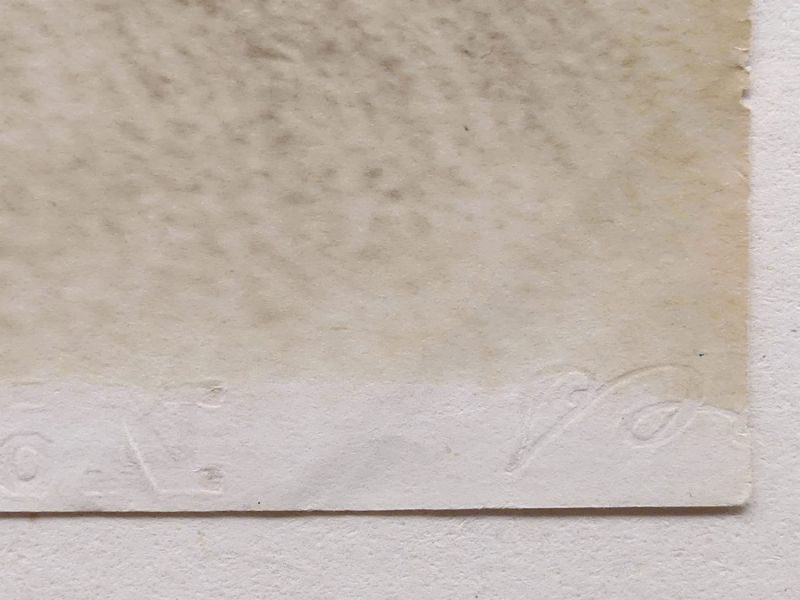
The historical collector's item is available as a loose sheet, features the original dimensions of 28,2 x 22,2 cm, is in good age-appropriate condition with slight toning, shows small light creases at the edges and corners, as well as a small brown spot in the upper left corner which is primarily visible on the back. The bottom margin features a faint contemporary description within the light area, along with a blind stamp or archive number reading "No. 74".
The entire arrangement, with the direct gaze into the camera, follows the contemporary aesthetic conventions of European collectors and tourists for whom such scenes were staged in the studio. This print was produced in the period between 1880 and 1890, during the peak phase of Egyptian travel photography. From a historical perspective, this original albumin photo is of high value as it preserves the visual construction of the Orient and the costume history of the late Ottoman era as an authentic visual primary document.
The historical collector's item is available as a loose sheet, features the original dimensions of 28,2 x 22,2 cm, is in good age-appropriate condition with slight toning, shows small light creases at the edges and corners, as well as a small brown spot in the upper left corner which is primarily visible on the back. The bottom margin features a faint contemporary description within the light area, along with a blind stamp or archive number reading "No. 74".
Quick purchase
Welcome back!
Newsletter subscription
E-mail address:
The newsletter can be canceled here or in your Account at any time.
Social Media


Payment methods


Raritaeten-Shop © 2026 | Template © 2009-2026 by modified eCommerce Shopsoftware
modified eCommerce Shopsoftware © 2009-2026