



- Details
- More images
Products description
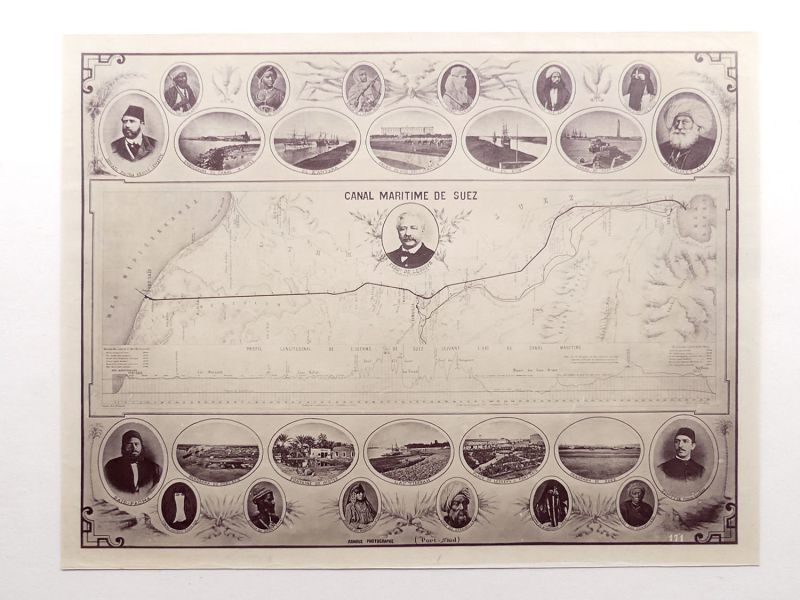
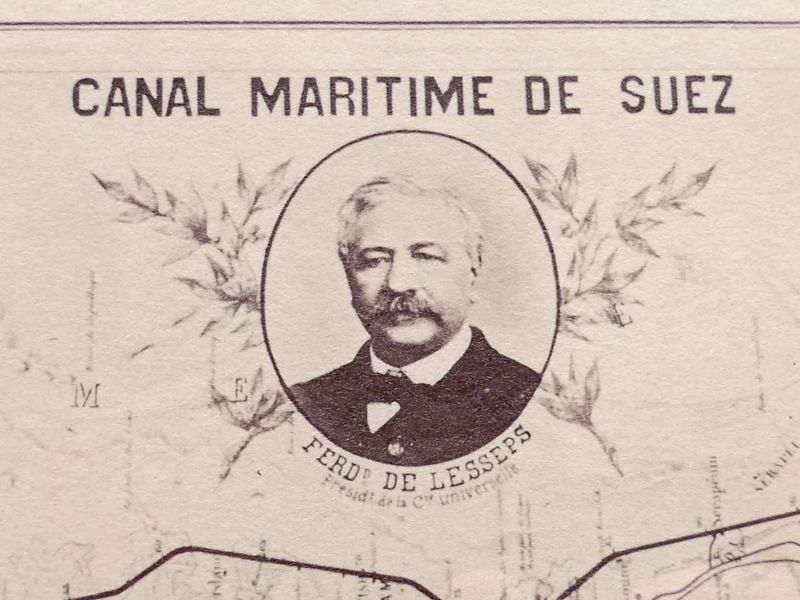
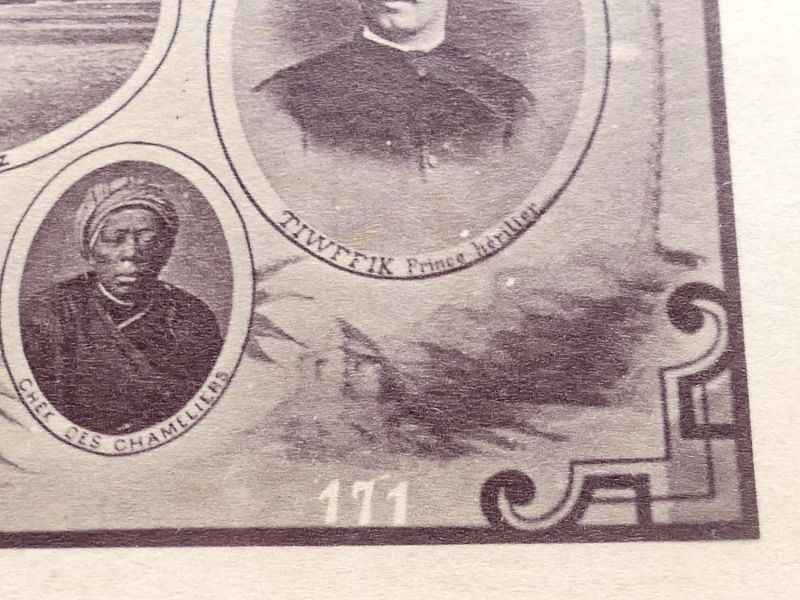
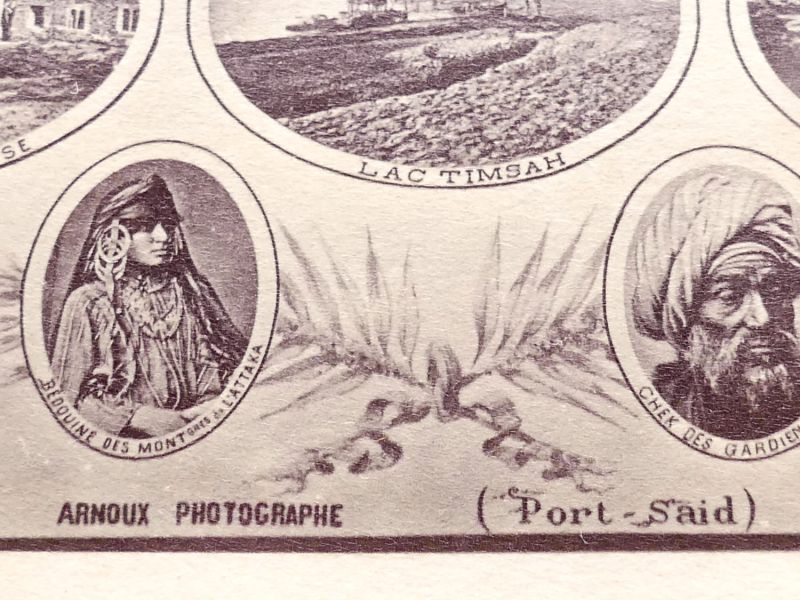
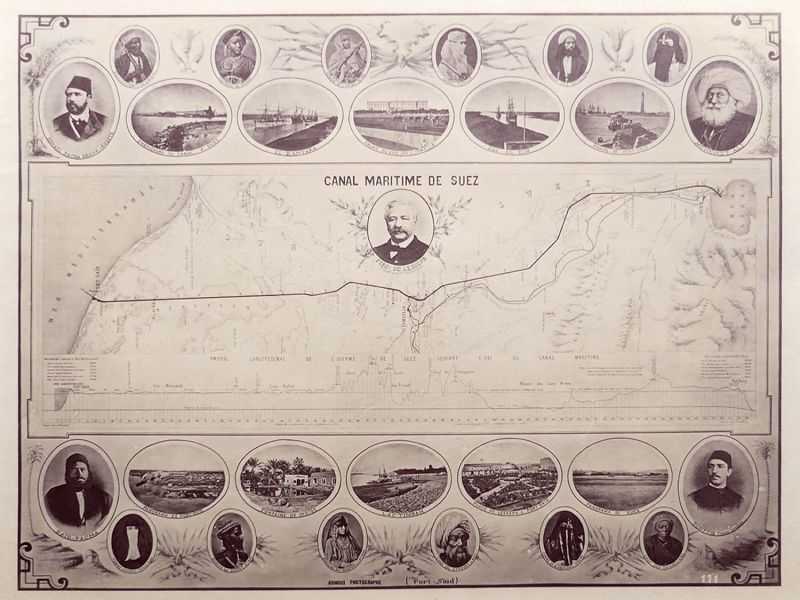
This historical photograph shows a rare cartographic and photographic presentation overview of the Suez Canal, taken as an original albumin print. The albumin process used was the dominant photochemical technique of that era, in which egg white was used to bind the light-sensitive silver salts to the paper, giving the photographs their characteristic warm sepia tone, a soft glossy surface, and high detail sharpness. A detailed map of the Suez Canal serves as the central graphic, depicting the entire course from the Mediterranean Sea at Port Said to the Red Sea at Suez with important details regarding the construction and surrounding area. At the center of the composition is an oval portrait of Ferdinand de Lesseps, the French diplomat and primary person responsible for the construction of the canal. This significant contemporary document is decorated and framed by a total of 27 small photographs documenting various personalities, such as Egyptian officials and key figures of the canal construction, as well as prominent locations and historical scenes along the new waterway.
The authorship of the photographic images and the compilation is undisputedly attributed to the renowned French photographer Hippolyte Arnoux due to the original credit at the bottom margin, who is considered the most important chronicler of the construction work. This print was produced around the year 1869, directly during the phase of the celebratory opening of the project of the century. From a historical perspective, this original combination sheet is of outstanding museum value as it preserves the technological and political dimension of the canal opening in an artistic overview as an authentic visual primary document.
The historical collector's item is available as a loose sheet, features the original dimensions of 26,5 x 21 cm, is in good age-appropriate condition with slight toning, shows small light creases at the edges and corners, and features the archive number 171 within the negative on the bottom right.
The authorship of the photographic images and the compilation is undisputedly attributed to the renowned French photographer Hippolyte Arnoux due to the original credit at the bottom margin, who is considered the most important chronicler of the construction work. This print was produced around the year 1869, directly during the phase of the celebratory opening of the project of the century. From a historical perspective, this original combination sheet is of outstanding museum value as it preserves the technological and political dimension of the canal opening in an artistic overview as an authentic visual primary document.
The historical collector's item is available as a loose sheet, features the original dimensions of 26,5 x 21 cm, is in good age-appropriate condition with slight toning, shows small light creases at the edges and corners, and features the archive number 171 within the negative on the bottom right.
Quick purchase
Welcome back!
Newsletter subscription
E-mail address:
The newsletter can be canceled here or in your Account at any time.
Social Media


Payment methods


Raritaeten-Shop © 2026 | Template © 2009-2026 by modified eCommerce Shopsoftware
modified eCommerce Shopsoftware © 2009-2026