



- Details
- More images
Products description
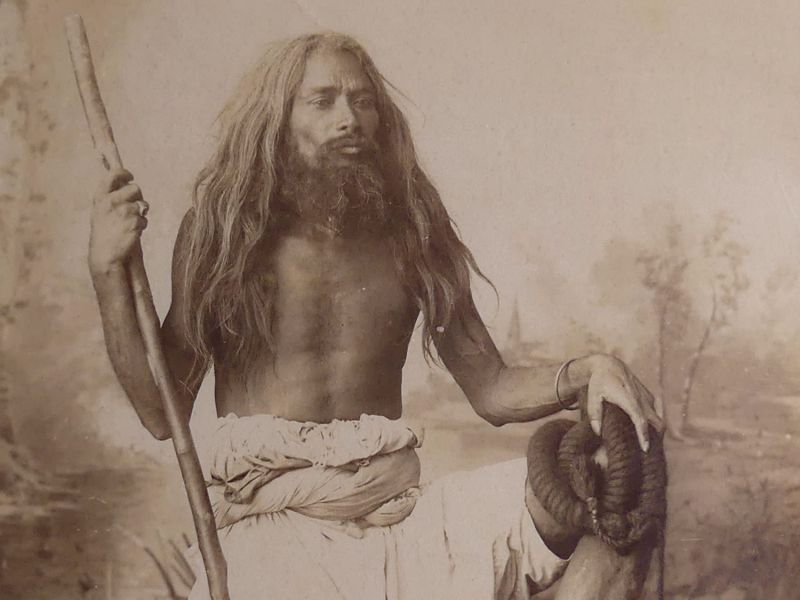
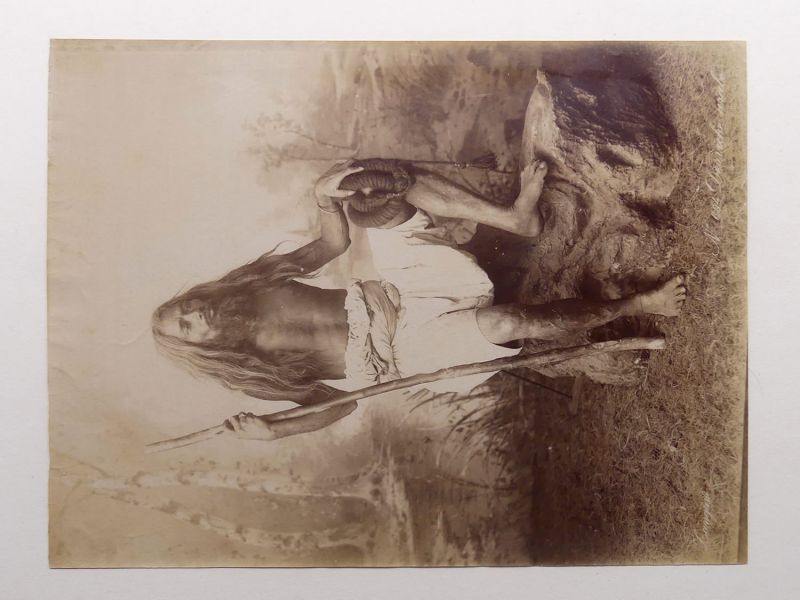
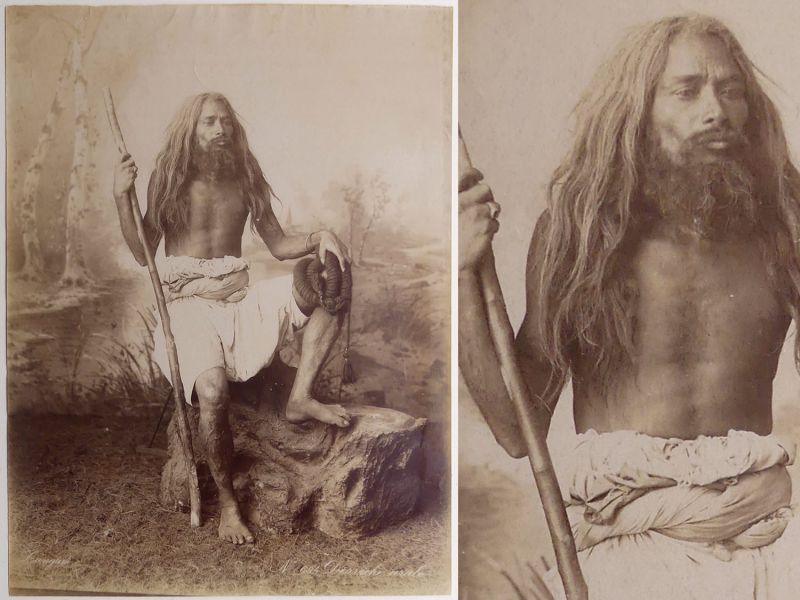
This historical photograph shows an exceptionally rare and characterful studio staging of an ascetic Sufi mystic, titled "Derviche arabe," taken as an original albumin print in portrait format. The albumin process used was the dominant photochemical technique of that era, in which egg white was used to bind the light-sensitive silver salts to the paper, giving the photographs their characteristic warm sepia tone, a soft glossy surface, and high detail sharpness. The extremely expressive motif documents the dervish in his traditional tattered clothing as a symbol of renunciation, surrounded by his ritual attributes such as a wooden walking staff in one hand and a coarsely wound rope in the other.
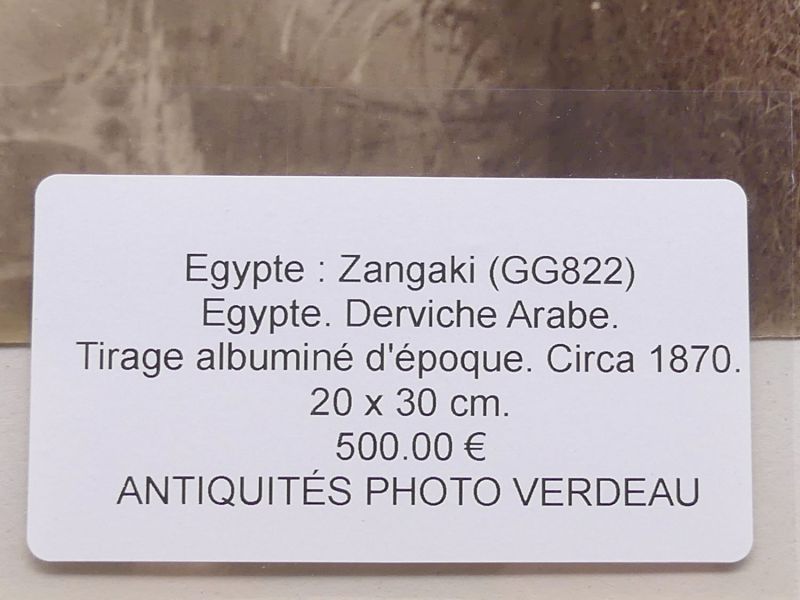
The authorship is undisputedly attributed to the renowned Greek Zangaki Brothers due to the original signature in the photo negative, who are among the most important chroniclers of Egypt in the late 19th century. This print was produced in the period between 1870 and 1890, during the peak phase of Orientalist travel and portrait photography. From a historical perspective, this original albumin photo is of invaluable worth as it preserves a rare visual testimony of Islamic mysticism and the religious culture of North Africa prior to the profound societal transformations of the 20th century as an authentic primary document.
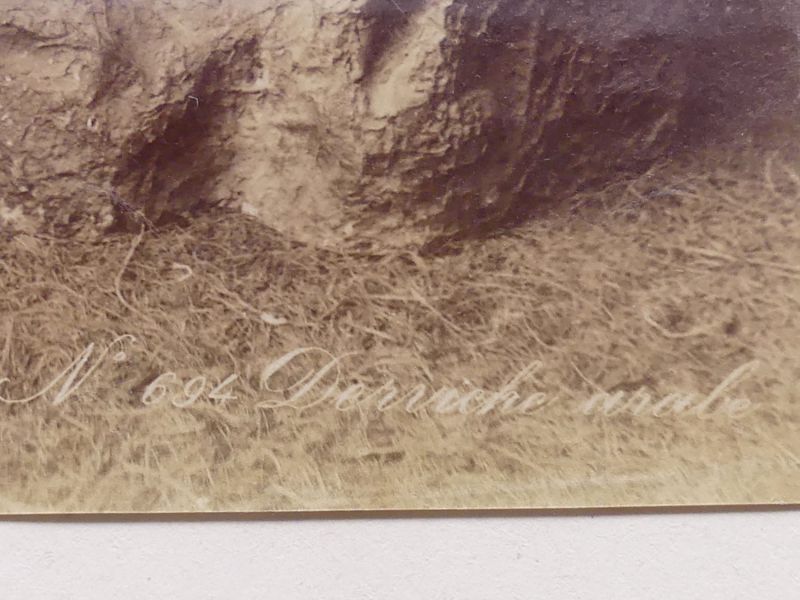
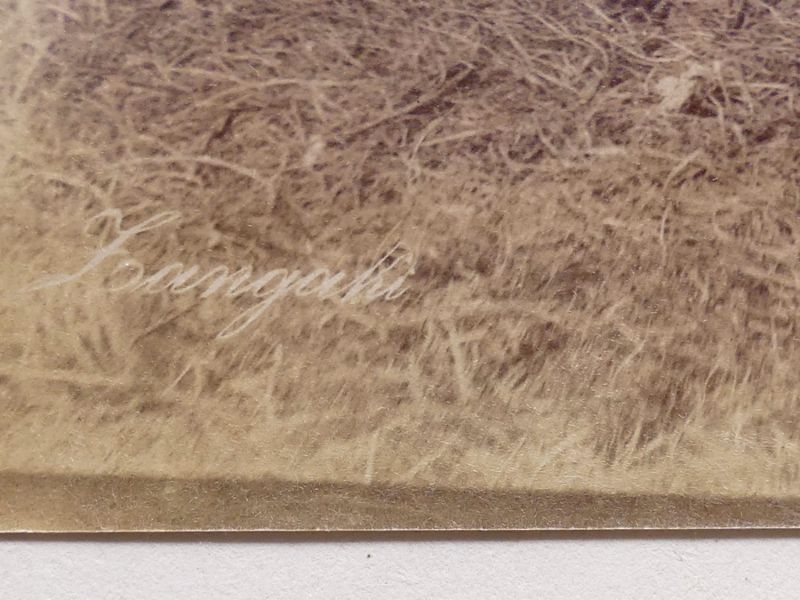
The historical collector's item is available as a loose sheet, features the original dimensions of 28 x 21,5 cm, and is in good age-appropriate condition with slight toning; small light creases at the edges and corners. The bottom margin features the original white text within the photo negative: "Zangaki - No. 694 - Derviche arabe."
The authorship is undisputedly attributed to the renowned Greek Zangaki Brothers due to the original signature in the photo negative, who are among the most important chroniclers of Egypt in the late 19th century. This print was produced in the period between 1870 and 1890, during the peak phase of Orientalist travel and portrait photography. From a historical perspective, this original albumin photo is of invaluable worth as it preserves a rare visual testimony of Islamic mysticism and the religious culture of North Africa prior to the profound societal transformations of the 20th century as an authentic primary document.
The historical collector's item is available as a loose sheet, features the original dimensions of 28 x 21,5 cm, and is in good age-appropriate condition with slight toning; small light creases at the edges and corners. The bottom margin features the original white text within the photo negative: "Zangaki - No. 694 - Derviche arabe."
Quick purchase
Welcome back!
Newsletter subscription
E-mail address:
The newsletter can be canceled here or in your Account at any time.
Social Media


Payment methods


Raritaeten-Shop © 2026 | Template © 2009-2026 by modified eCommerce Shopsoftware
modified eCommerce Shopsoftware © 2009-2026