



- Details
- More images
Products description
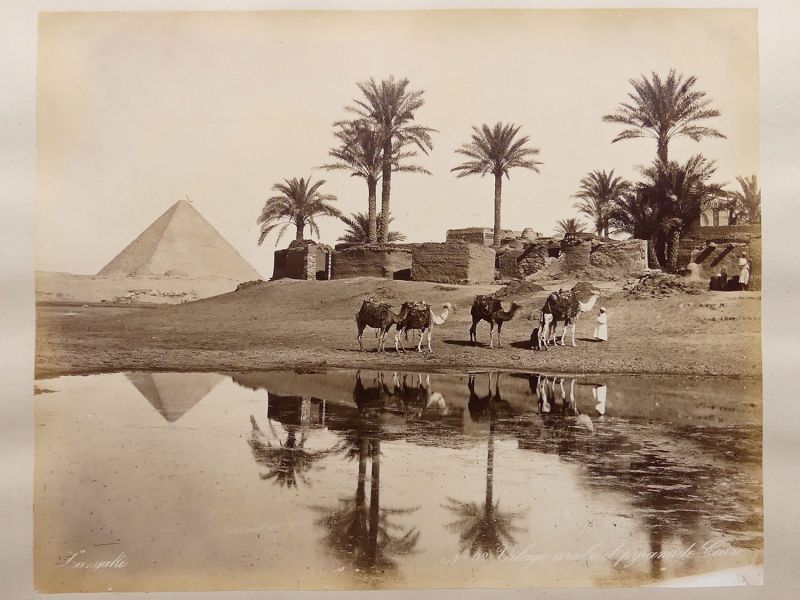
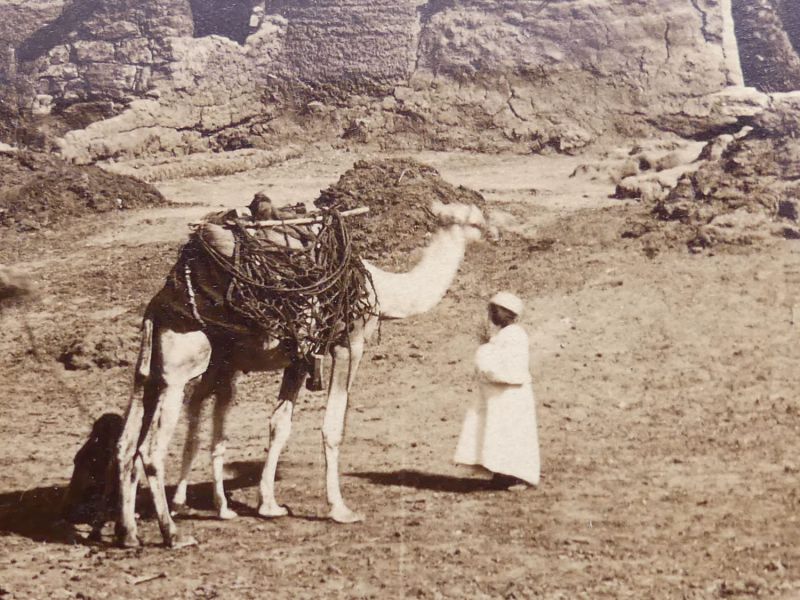
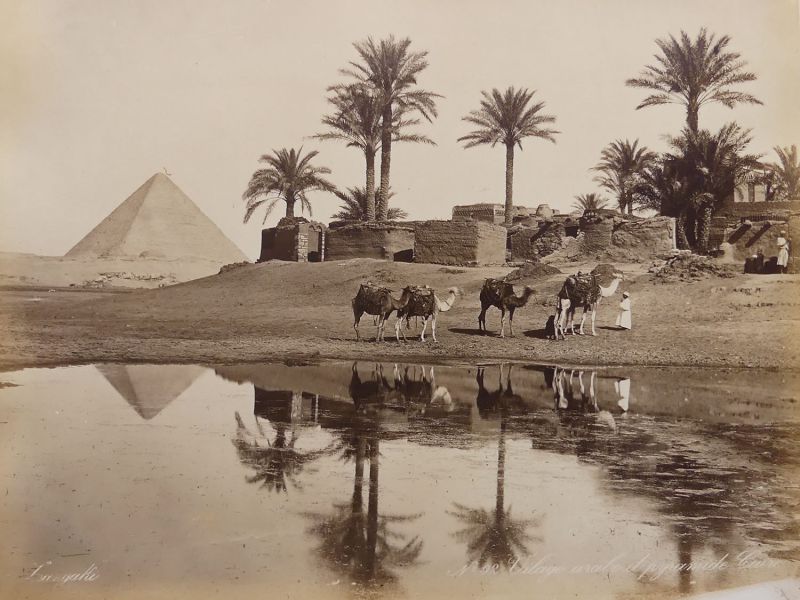
This historical photograph shows one of the most famous, sought-after, and atmospherically fascinating landscape views of Egypt from the pioneering era of travel photography, taken as an original albumin print mounted on cardboard. The albumin process used was the dominant photochemical technique of that era, in which egg white was used to bind the light-sensitive silver salts to the paper, giving the photographs their characteristic warm sepia tone, a soft glossy surface, and high detail sharpness.
Masterfully composed in landscape format, the motif documents the historical Arabian village of Giza on the fertile banks of the Nile during the annual flooding season in the late 19th century. In the foreground, majestic groups of palm trees, grazing camels, and a local staffage guide are reflected on the riverbank, while the monumental silhouette of the Cheops Pyramid towers imposingly into the sky in the background. This iconic composition combines the romantic ideal of the untouched Egyptian cultural landscape with the world-famous ancient wonders of the world and was the absolute favorite motif of wealthy European travelers to the Orient during the Grand Tour era.
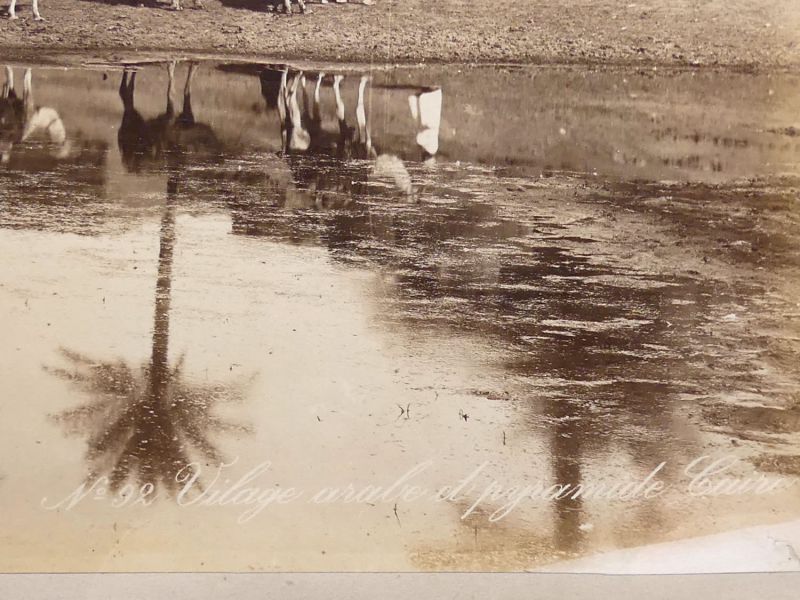
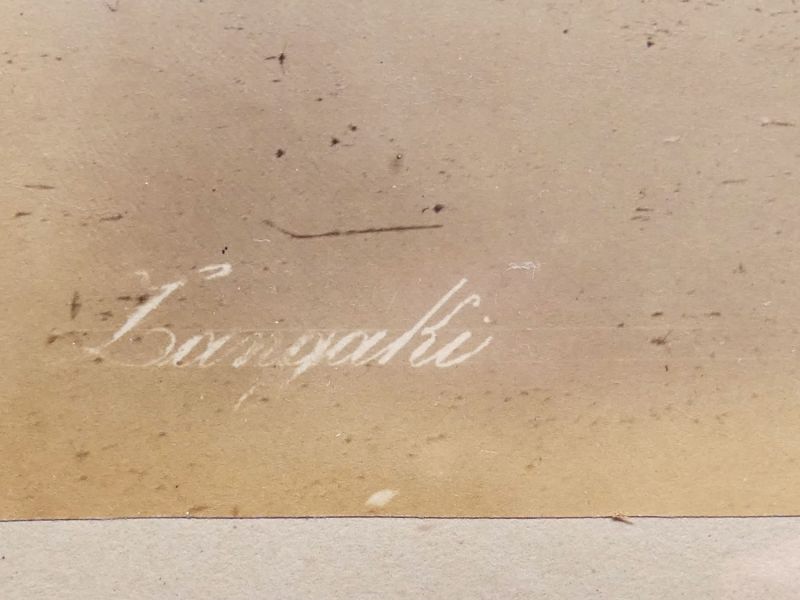
The authorship is undisputedly attributed to the Greek Zangaki Brothers due to the original white signature in the photo negative, whose mobile studio was praised for its excellent exposure quality and deep, impactful landscape compositions. This top piece originated around the year 1880. The highly sought-after rarity features the photograph dimensions of 28 x 22,5 cm mounted on a 33 x 27 cm original cardboard backing and is in good age-appropriate condition with a beautiful, even, slight toning. It shows a slight waviness of the backing cardboard due to storage, partially somewhat yellowed margins, a small inconspicuous tear at the very bottom margin, as well as the original white caption within the photo negative: "Zangaki - No. 92 Vilage arabe et pyramide Cairo."
Masterfully composed in landscape format, the motif documents the historical Arabian village of Giza on the fertile banks of the Nile during the annual flooding season in the late 19th century. In the foreground, majestic groups of palm trees, grazing camels, and a local staffage guide are reflected on the riverbank, while the monumental silhouette of the Cheops Pyramid towers imposingly into the sky in the background. This iconic composition combines the romantic ideal of the untouched Egyptian cultural landscape with the world-famous ancient wonders of the world and was the absolute favorite motif of wealthy European travelers to the Orient during the Grand Tour era.
The authorship is undisputedly attributed to the Greek Zangaki Brothers due to the original white signature in the photo negative, whose mobile studio was praised for its excellent exposure quality and deep, impactful landscape compositions. This top piece originated around the year 1880. The highly sought-after rarity features the photograph dimensions of 28 x 22,5 cm mounted on a 33 x 27 cm original cardboard backing and is in good age-appropriate condition with a beautiful, even, slight toning. It shows a slight waviness of the backing cardboard due to storage, partially somewhat yellowed margins, a small inconspicuous tear at the very bottom margin, as well as the original white caption within the photo negative: "Zangaki - No. 92 Vilage arabe et pyramide Cairo."
Quick purchase
Welcome back!
Newsletter subscription
E-mail address:
The newsletter can be canceled here or in your Account at any time.
Social Media


Payment methods


Raritaeten-Shop © 2026 | Template © 2009-2026 by modified eCommerce Shopsoftware
modified eCommerce Shopsoftware © 2009-2026