



- Details
- More images
Products description
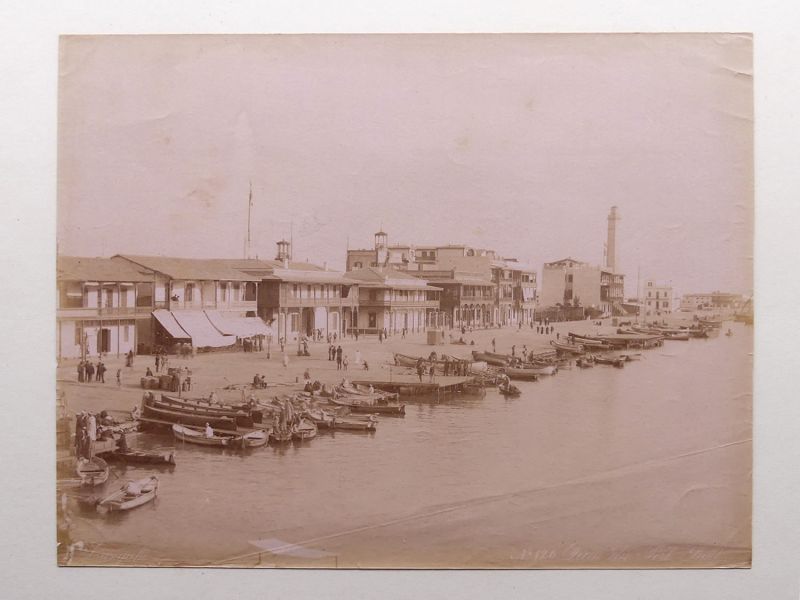
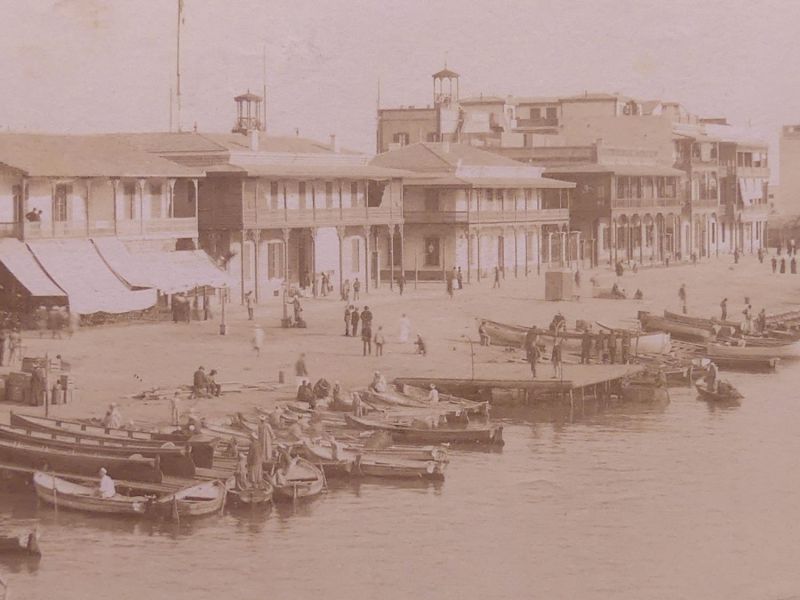
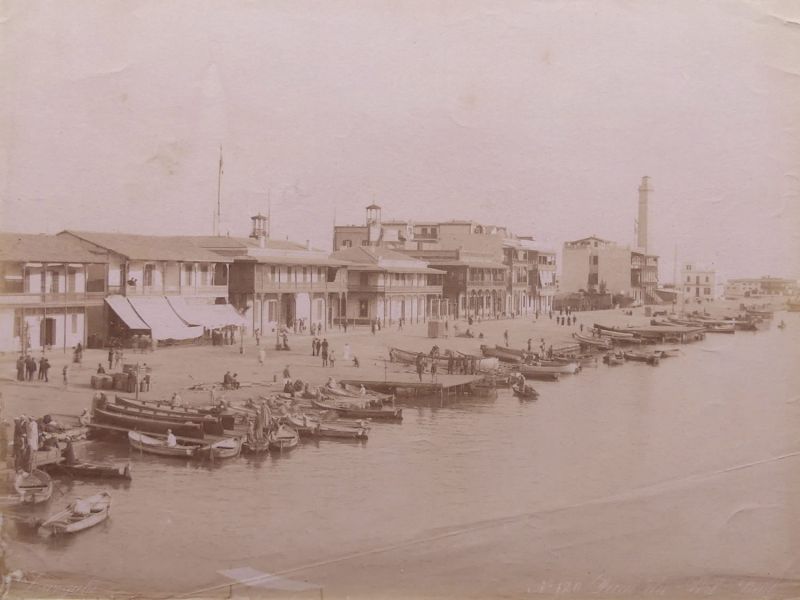
This historical photograph shows a busy and detailed view of the waterfront promenade and the quay of Port Said in Egypt, taken as an original albumin print around the year 1890. The albumin process used was the dominant photochemical technique of that era, in which egg white was used to bind the light-sensitive silver salts to the paper, giving the photographs their characteristic warm sepia tone, a soft glossy surface, and high detail sharpness. The photograph documents the pulsating life on the quay, featuring numerous small boats by the shore, passersby on the promenade, and the prominent multi-story colonial buildings along the commercial street in the background.
The work originates from the renowned studio of the Greek photographers George and Constantine Zangaki, who became some of the most important chroniclers of the Suez Canal and Egyptian daily life under the name Zangaki Brothers in the late 19th century. Their precisely composed street and harbor photographs were highly sought after as valuable souvenirs by European travelers. This print was produced at the end of the 19th century, during the busy heyday of the port city. From a historical perspective, these original albumin photos are of invaluable worth as they preserve the maritime infrastructure and multicultural flair of Egypt during the Victorian travel era as an authentic visual primary document. The original French title by the Zangaki brothers can be deciphered on the photograph as "Quai du Port Said," which perfectly identifies the scenery as the central harbor quay.
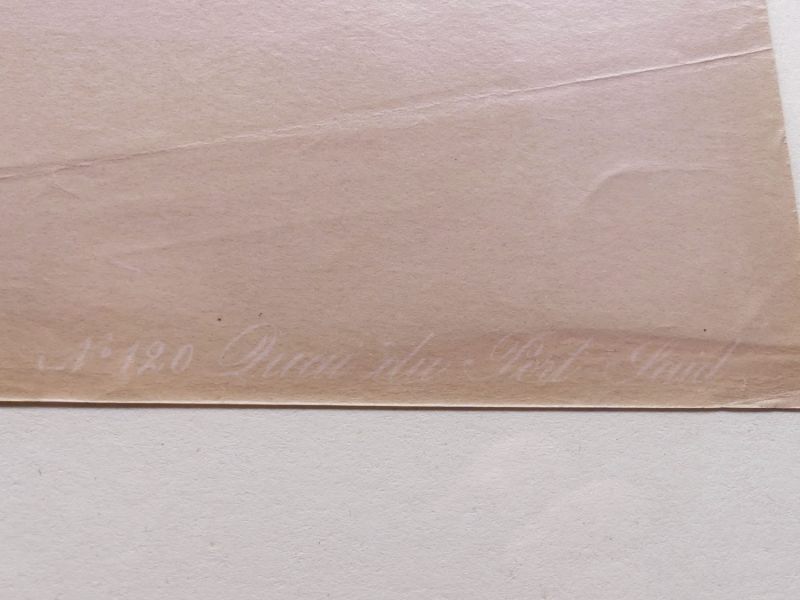
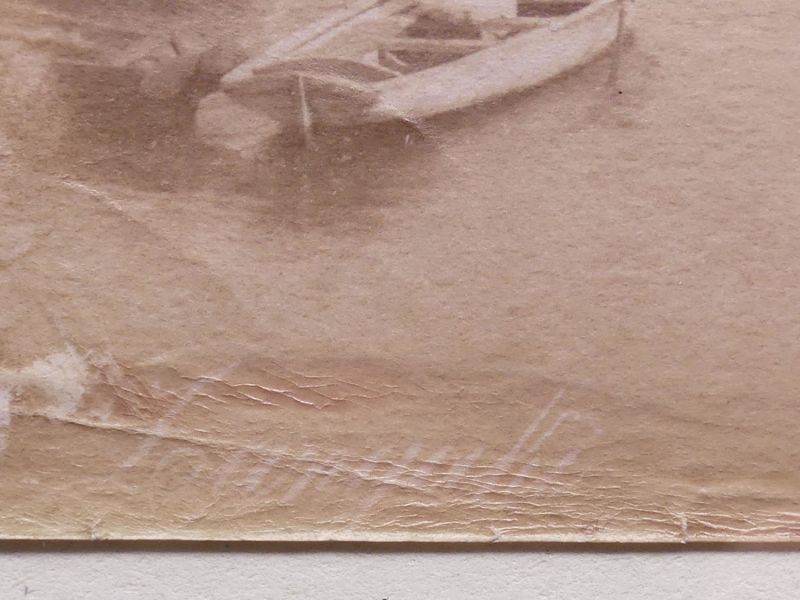
The historical collector's item is available as a loose sheet and features the original dimensions of 27,5 x 21,5 cm; small and light creases at the edges and corners; small surface tears; slight foxing on the back; overall in good age-appropriate condition with slight toning; signs of wear are corresponding to age; the bottom left margin features the original white artist's signature "Zangaki" as well as the handwritten note "Nr 120 Quai du Port Said" within the negative in the lower margin area.
The work originates from the renowned studio of the Greek photographers George and Constantine Zangaki, who became some of the most important chroniclers of the Suez Canal and Egyptian daily life under the name Zangaki Brothers in the late 19th century. Their precisely composed street and harbor photographs were highly sought after as valuable souvenirs by European travelers. This print was produced at the end of the 19th century, during the busy heyday of the port city. From a historical perspective, these original albumin photos are of invaluable worth as they preserve the maritime infrastructure and multicultural flair of Egypt during the Victorian travel era as an authentic visual primary document. The original French title by the Zangaki brothers can be deciphered on the photograph as "Quai du Port Said," which perfectly identifies the scenery as the central harbor quay.
The historical collector's item is available as a loose sheet and features the original dimensions of 27,5 x 21,5 cm; small and light creases at the edges and corners; small surface tears; slight foxing on the back; overall in good age-appropriate condition with slight toning; signs of wear are corresponding to age; the bottom left margin features the original white artist's signature "Zangaki" as well as the handwritten note "Nr 120 Quai du Port Said" within the negative in the lower margin area.
Quick purchase
Welcome back!
Newsletter subscription
E-mail address:
The newsletter can be canceled here or in your Account at any time.
Social Media


Payment methods


Raritaeten-Shop © 2026 | Template © 2009-2026 by modified eCommerce Shopsoftware
modified eCommerce Shopsoftware © 2009-2026