



- Details
- More images
Products description
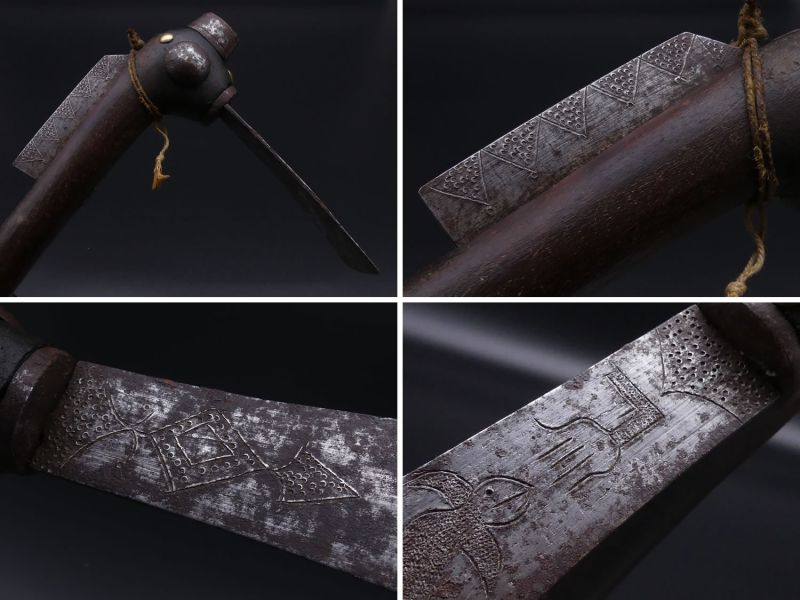
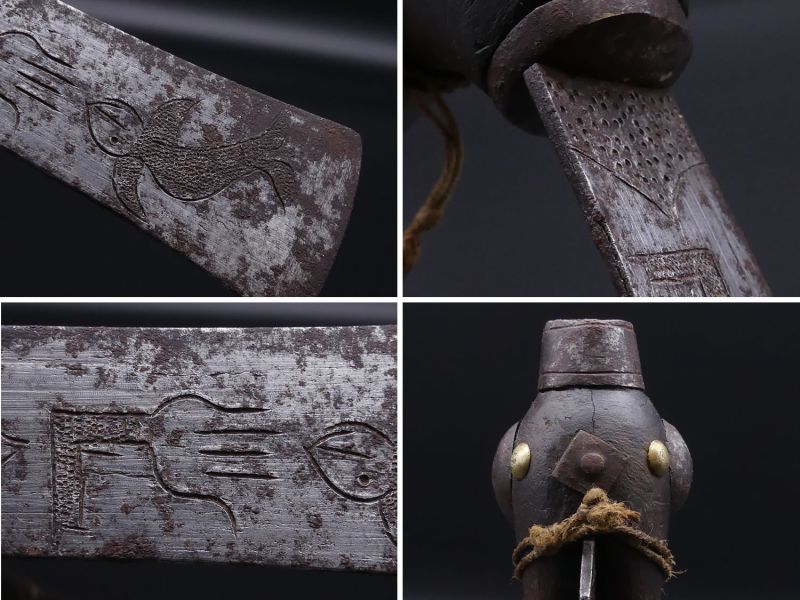
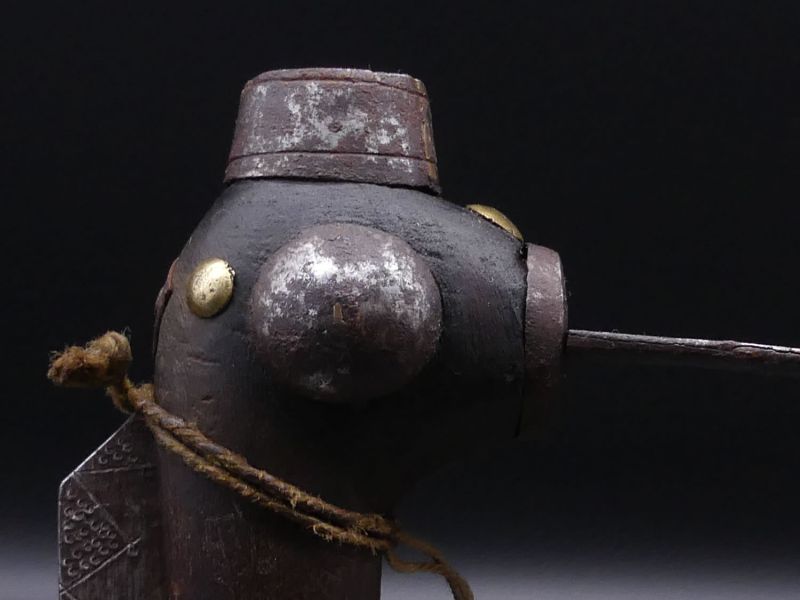
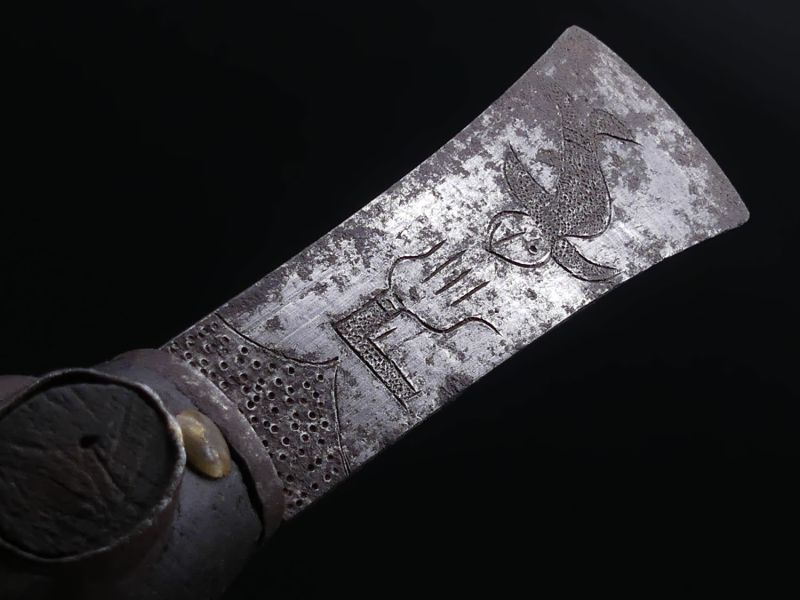
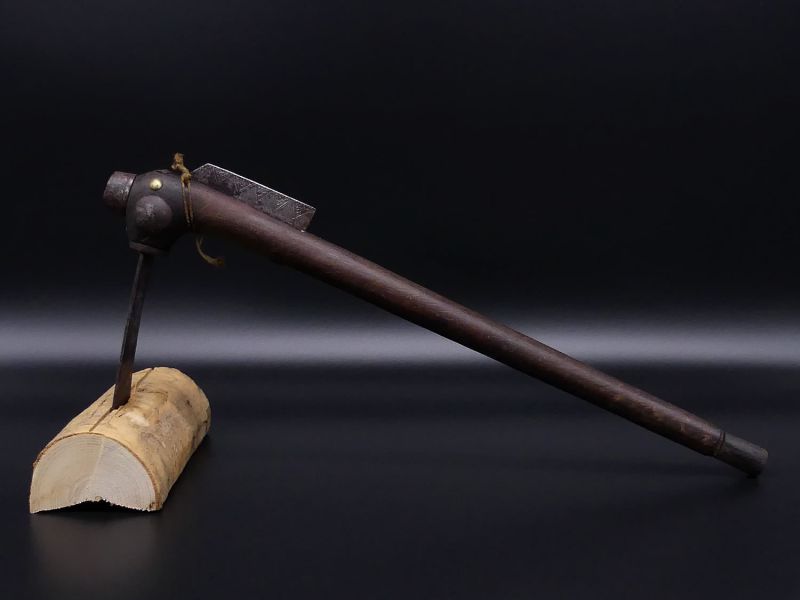
This extraordinary prestige Azde from the former Kingdom of Dahomey in today's Benin is a magnificent example of the ceremonial court art of the Fon people and impresses with its complex anthropomorphic design whereby the entire head of the axe is designed as a human figure through artistic metal applications. Furthermore this object impresses with a rare royal iconography on the hand-forged iron blade. The depiction shows in the center a hand in interaction with a fish which refers as a direct rebus to the dynasty founder King Houegbadja whose name symbolically stands for the fish that escapes the net and thus embodies the invincibility of the ruling line of Abomey. The hand in turn symbolizes the sovereign power and energy of the monarch whereby the fine stippling and geometric engravings on the metal reflect the masterful blacksmithing art of the Fon who manufactured these staffs as deputies of the king for official messages.
The object measures approx. 49 x 19 cm and features a short massively forged iron blade which is decorated on both sides with fine engravings and stably mounted on a dark hardwood shaft while the back side of the blade shows a striking decorated metal comb in an Iroquois look which gives the piece a warlike and at the same time dignified aesthetic. Particularly noteworthy is the elaborate mounting at the head end which is secured by two large iron rivets on both sides directly followed by decorative brass rivets and a concluding metal band at the upper end which in the overall picture forms the features of a human figure. The hardwood shaft shows a deep authentic patina and still carries an old string on the handle which could point to an earlier documentation in a collection as a remainder of an original labeling. Rust spots on the iron; signs of use corresponding to the age.
The object measures approx. 49 x 19 cm and features a short massively forged iron blade which is decorated on both sides with fine engravings and stably mounted on a dark hardwood shaft while the back side of the blade shows a striking decorated metal comb in an Iroquois look which gives the piece a warlike and at the same time dignified aesthetic. Particularly noteworthy is the elaborate mounting at the head end which is secured by two large iron rivets on both sides directly followed by decorative brass rivets and a concluding metal band at the upper end which in the overall picture forms the features of a human figure. The hardwood shaft shows a deep authentic patina and still carries an old string on the handle which could point to an earlier documentation in a collection as a remainder of an original labeling. Rust spots on the iron; signs of use corresponding to the age.
Quick purchase
Welcome back!
Newsletter subscription
E-mail address:
The newsletter can be canceled here or in your Account at any time.
Social Media


Payment methods


Raritaeten-Shop © 2026 | Template © 2009-2026 by modified eCommerce Shopsoftware
modified eCommerce Shopsoftware © 2009-2026