



- Details
- More images
Products description
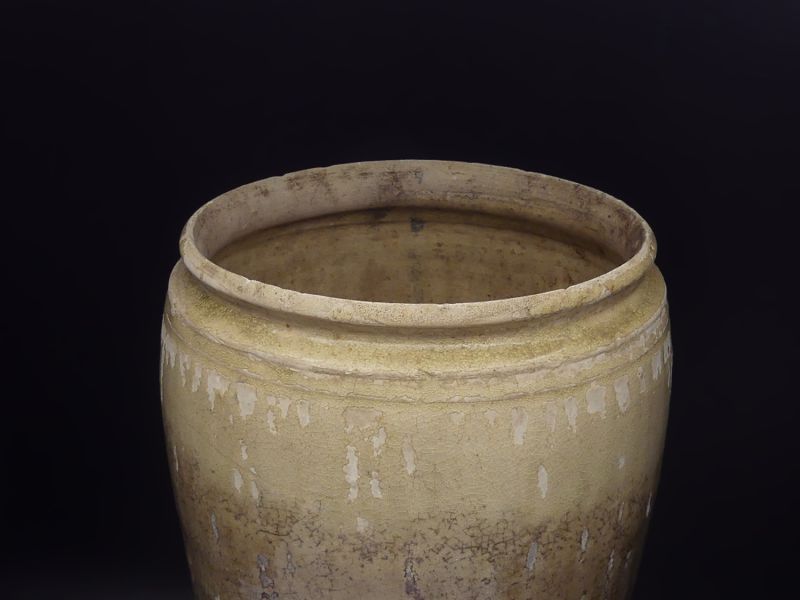
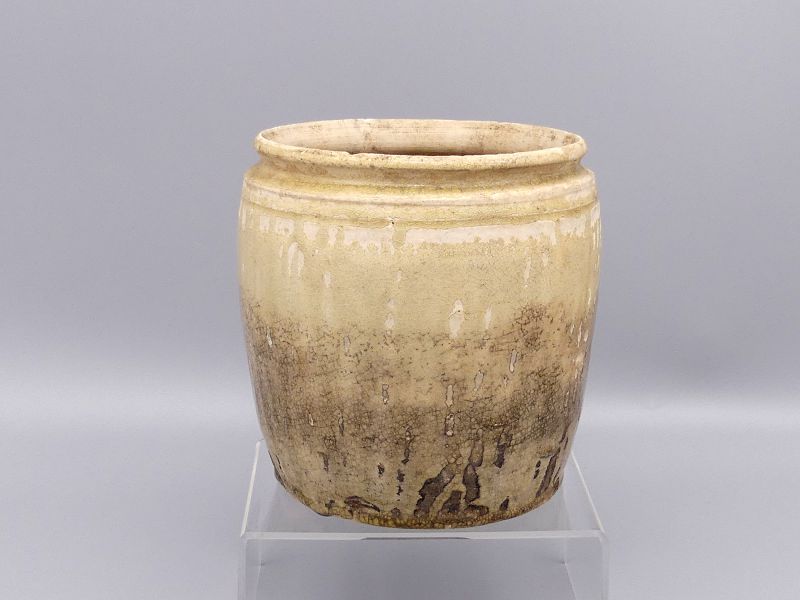
This exceptional stoneware storage jar was originally attributed to the Angkor/Khmer period, but following in-depth examination and several expert opinions, the form, materiality, and surface texture suggest an origin in the Vietnamese region, presumably between the late Lý Dynasty (one thousand nine to one thousand two hundred twenty-five) and the Trần Dynasty (one thousand two hundred twenty-five to one thousand four hundred).
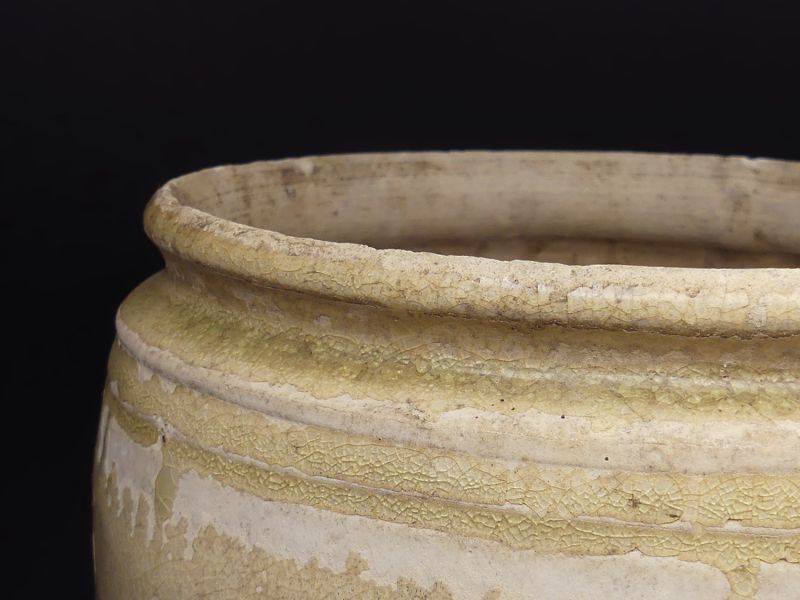
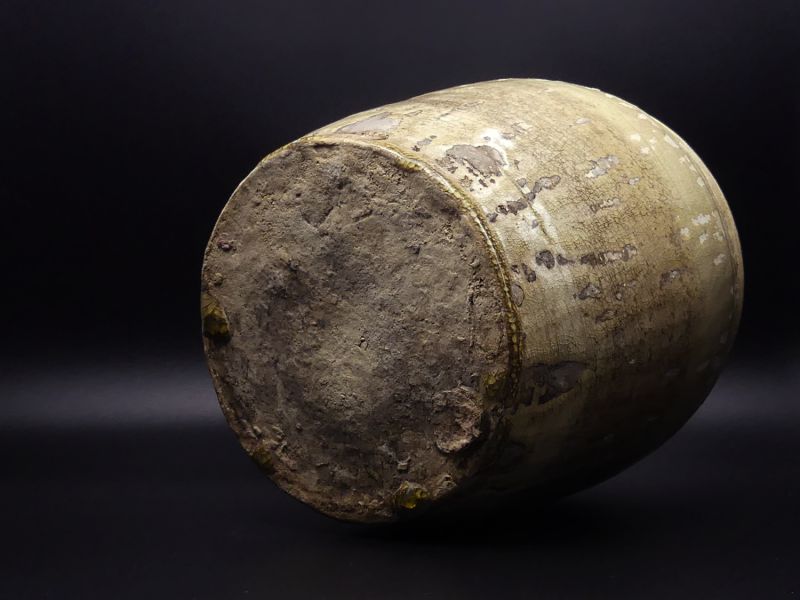
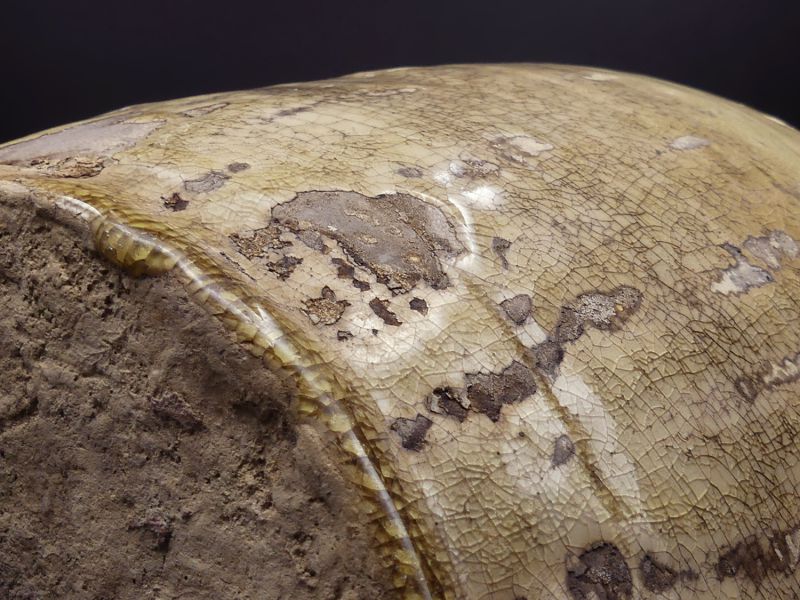
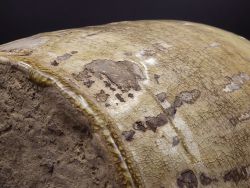
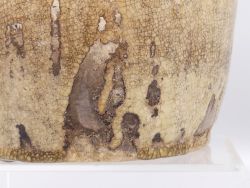
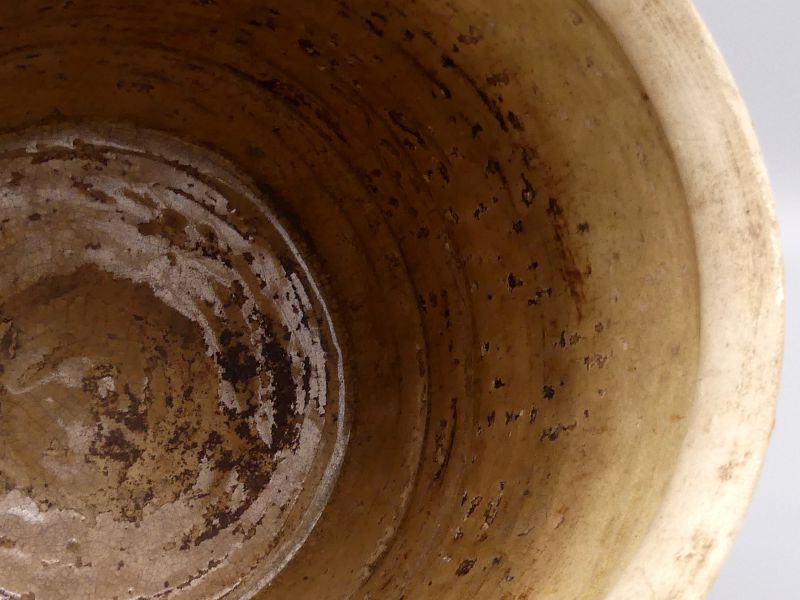
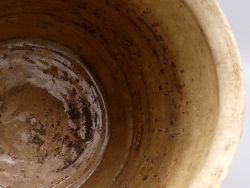
Characteristic features include the bulbous shape, the sturdy wall, and the mineralized surface with crystalline deposits, which indicate a very long period of burial in a damp, mineral-rich environment – a process that develops over centuries.
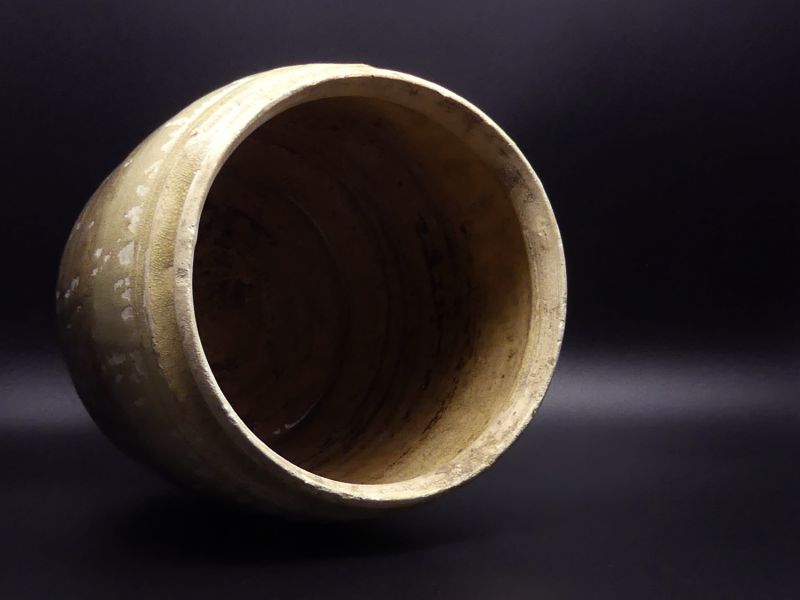
The former attribution to the Khmer culture is based on formal similarities, but the firing technique and clay body clearly point to a Vietnamese workshop tradition. A comparison with the North Thai Lanna culture (thirteenth to sixteenth century) remains possible. However, according to the current expert consensus (two thousand twenty-five), much points towards a Vietnamese origin between the twelfth and sixteenth centuries. The vessel shows signs of use commensurate with age, deposits, and minor restorations (cf. photos); the lid is missing. The fine, fossil-like mineral skin gives the piece an authentic patina.
Material: Stoneware, heavily mineralized; signs of use commensurate with age and storage conditions, partly restored; Dimensions: approximately nineteen by twenty by twenty centimeters.
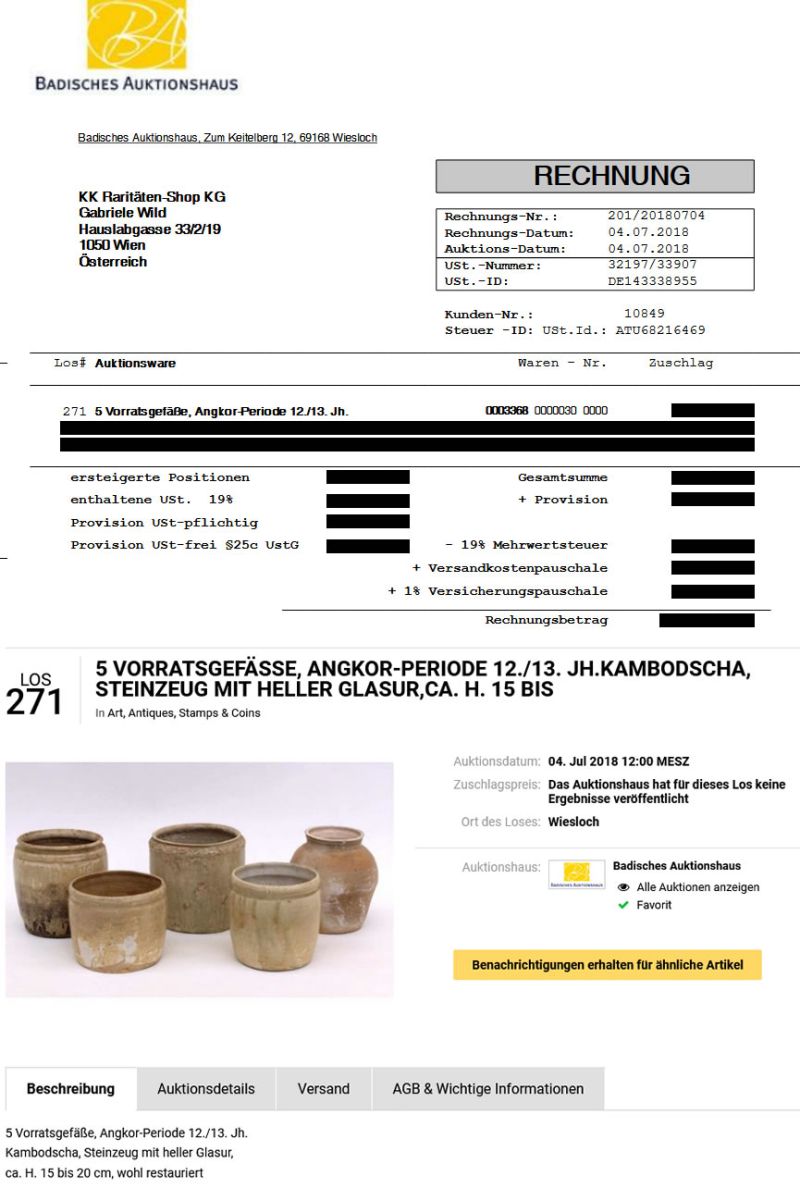
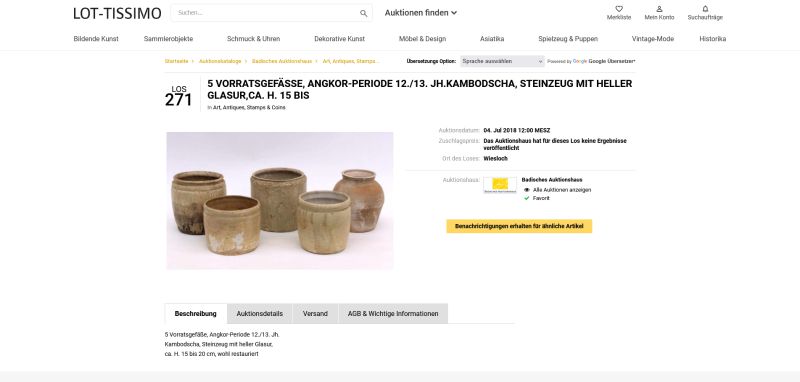
Provenance: Badisches Auktionshaus Wiesloch, Auction of the fourth of July two thousand eighteen, Lot No. two hundred seventy-one. Upon delivery: Copy of the invoice and printout of the auction page are included.
A fascinating object between Vietnamese, Post-Angkorian, and Lanna tradition. Due to the typical form and patina, the most probable origin is Vietnam, twelfth to sixteenth century – a rare, culturally significant collector's item. Similar comparative pieces: Stevenson & Guy, Vietnamese Ceramics – A Separate Tradition, Oxford nineteen ninety-seven, p. two hundred four, no. sixty. and R. M. Brown, The Ceramics of South-East Asia, Oxford nineteen seventy-seven, plate A three.
Characteristic features include the bulbous shape, the sturdy wall, and the mineralized surface with crystalline deposits, which indicate a very long period of burial in a damp, mineral-rich environment – a process that develops over centuries.
The former attribution to the Khmer culture is based on formal similarities, but the firing technique and clay body clearly point to a Vietnamese workshop tradition. A comparison with the North Thai Lanna culture (thirteenth to sixteenth century) remains possible. However, according to the current expert consensus (two thousand twenty-five), much points towards a Vietnamese origin between the twelfth and sixteenth centuries. The vessel shows signs of use commensurate with age, deposits, and minor restorations (cf. photos); the lid is missing. The fine, fossil-like mineral skin gives the piece an authentic patina.
Material: Stoneware, heavily mineralized; signs of use commensurate with age and storage conditions, partly restored; Dimensions: approximately nineteen by twenty by twenty centimeters.
Provenance: Badisches Auktionshaus Wiesloch, Auction of the fourth of July two thousand eighteen, Lot No. two hundred seventy-one. Upon delivery: Copy of the invoice and printout of the auction page are included.
A fascinating object between Vietnamese, Post-Angkorian, and Lanna tradition. Due to the typical form and patina, the most probable origin is Vietnam, twelfth to sixteenth century – a rare, culturally significant collector's item. Similar comparative pieces: Stevenson & Guy, Vietnamese Ceramics – A Separate Tradition, Oxford nineteen ninety-seven, p. two hundred four, no. sixty. and R. M. Brown, The Ceramics of South-East Asia, Oxford nineteen seventy-seven, plate A three.



Quick purchase
Welcome back!
Newsletter subscription
E-mail address:
The newsletter can be canceled here or in your Account at any time.
Social Media


Payment methods


Raritaeten-Shop © 2026 | Template © 2009-2026 by modified eCommerce Shopsoftware
modified eCommerce Shopsoftware © 2009-2026